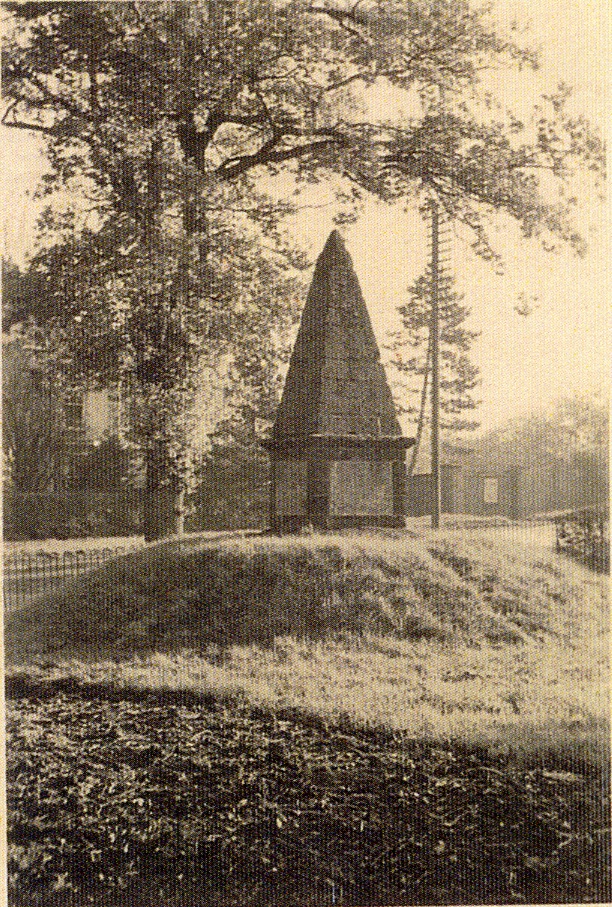
Growing up in Finedon during the 1950s, Obelisk was quite possibly the first foreign word I learned. As with most inquisitive little boys of that time I plagued my parents with questions about the real purpose of this, one of Finedon’s magnificent landmarks, the humble Obelisk. To fit in with the ‘boy’s own’ theme of those times I was told that the mound underneath the Obelisk itself was the burial place of the famous highwayman villain Dick Turpin’s horse Bess! Albeit being far from the truth, I have to admit I still have a soft spot for that harmless childhood untruth.
Situated where the A510 and the A6 cross, the Obelisk is still lightly veiled, to some degree, in mystery. It was made and erected by Sumpter of Irthlingborough c.1789 for Sir John English Dolben (c. 1750–1837) the 4th and final Baronet of Finedon (whose son, Colonel William Somerset Dolben had pre-deceased him).
Relatively short for an obelisk, it is made of coursed limestone and stands on a square plinth with plain cornice, there being a plain limestone tablet on each face. It could be reasonably assumed that each face may well have sported a distance marker, most likely to important places like Bedford, Leicester, Northampton and Peterborough, although these tablets are now so badly eroded it is impossible to prove this.
Distance marker or not, the other recognised reason for its existence is that of a celebration to commemorate the return to sanity of the King George III and to give blessings. Thanksgiving celebrations were held on 23rd of April, throughout the land, including at Finedon, where they were marked with fireworks displays and cannon fire!
The Obelisk serves Finedon well as a historical landmark of the area, reflecting the architectural styles of the late 18th century. While it may not be a widely recognised tourist attraction, it does hold local significance and adds to the historical landscape of Finedon.
From the early 15th to the 18th century, the manor of Finedon was in the hands of the Mulso family.Upon the death of Tanfield Mulso the last of the Mulso line, Finedon passed to his daughter, Anne, who married Sir Gilbert Dolben, 1st Baronet. The house remained in the Dolben family until the death of the last baronet, Sir John English Dolben, in 1837.It then passed down to his daughter, Frances, who married William Harcourt Isham Mackworth (1806–1872), a younger son of Sir Digby Mackworth, 3rd Baronet, who also took the name of Dolben. Sadly, both his heirs were drowned; the elder son William Digby Mackworth Dolben died whilst serving in the Royal Navy off the coast of Africa in 1863 and the younger, the noted poet Digby Mackworth Dolben, died aged just seventeen in 1867 whilst swimming in the River Welland, near South Luffenham in Rutland. The estate subsequently passed to their sister, Ellen, after whose death in 1912 the estate was divided and sold.
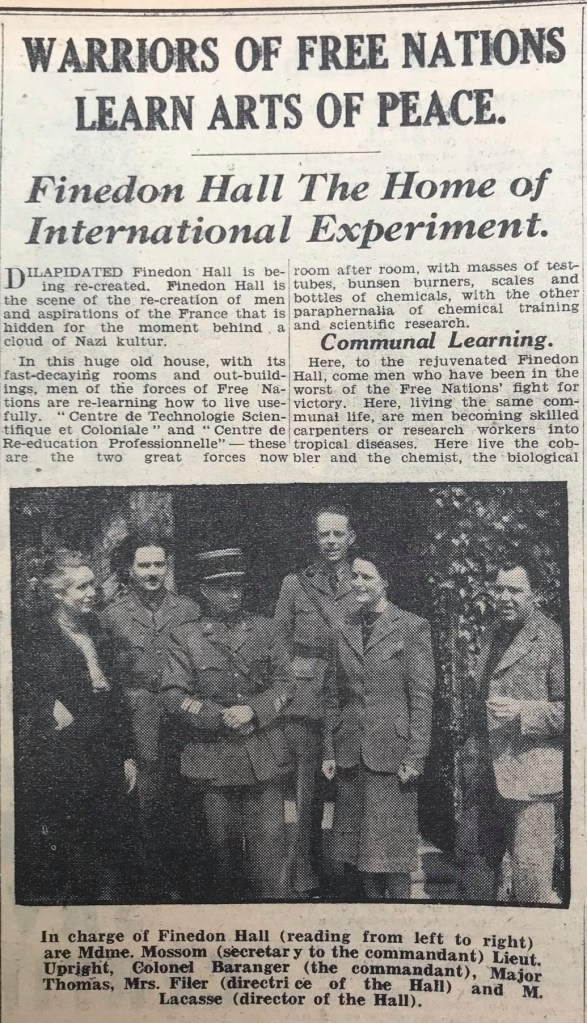
It is well recorded that in 1936 the hall was used by the Free French as a rehabilitation centre for allied troops, and was visited on at least one occasion by President Charles de Gaulle. This centre was run by Colonel Pierre Mallinger, who subsequently bought the hall and used it for some time as a centre to conduct research into tropical diseases.Following Colonel Mallinger’s death in 1971, the hall was sold to one Geoffrey St Clair Wade who had a scheme for developing it. Sadly, his proposal was never realised and by the time of his death, the condition of the house had fallen into a parlous state.
The hall would eventually be saved, in part, due to the efforts of the Ancient Monuments Society and during the 1990’s converted by developers into today’s current apartments.
The Building
The core of the house is 17th or 18th century, and was extensively remodelled by William Harcourt Isham Mackworth Dolben (1806–1872). There are datestones which indicate a range of different building phases: 1851, 1855, 1856 and 1859. The architect is unknown, but it is most likely to have been E. F. Law of Northampton although Mackworth Dolben was an ‘enthusiastic’ amateur architect himself.
There is also a range of fine ancillary buildings: the Museum Tower, the Bell Tower and the Old Chapel, also listed Grade II. The estate was originally landscaped with advice from the renowned Humphry Repton. The Hall does have a listing by Historic England and is recorded as follows:
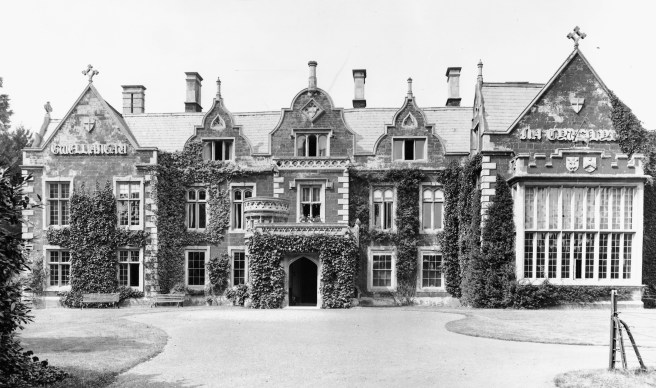
A Country house. Probably C17 and C18, datestones 18S5, 1851, 1856 and l859 record existing alterations, probably by E.F. Law, for William Mackworth-Dolben. Ironstone ashlar with limestone dressings and slate roof. H-plan, Tudor-Gothic style. Entrance front is 2 storeys with attic. Centre of five-window range with flanking gables breaking forward. Central porch has panelled door with four-centred moulded stone head with decorated and inscribed spandrels. Circular turret attached to left of porch forms part of ten-light stone-mullion window with transoms havinq moulded stone panels and a quatrefoil parapet above. Ground and first floor windows have C18 plain stone architraves with keyblocks and those at first floor have C19 four-light stone-mullion windows with transoms, inserted into the earlier surround. Centre bay breaks forward with quatrefoil parapet at eaves level and gargoyles at corners, three attic windows have Tudor style gables with three-light stone-mullion windows with shields and trefoil above. Projecting gable to left: has two-window range similar to centre range.
A projecting gable to right has large C19 twenty-two-light, square stone-mullion bay window. Return wall to left is similar, of one-window range. Rusticated ashlar quoins to all corners and plain castellated parapets with ashlar copings. Ashlar stacks at ridge and end. Inscription to left gable “Gwell Angau”; continuation in right gable “Na Vywilydd” is missing. Various heraldic shields.
Garden front to left of entrance front of seven-window range. Door openings to left and right of centre have moulded stone surrounds, that to left has segmental pediment. two-storey canted stone bay windows to centre and left of range have quatrefoil parapets. Similar single-storey square stone bay to far left. Windows have stone mullions some with transoms and C18 plain stone architraves. Two and three-light attic windows set in Tudor style gables, some now missing. Remains of various inscriptions and carved heads. Elevation to right of main front is plain in similar style with attached wall and ashlar gatepier.
Rear elevation has projecting gable to left and twin gables to right. Centre three-window range, one blocked, with C18 plain stone surrounds with keyblocks, Gable to right has tall, six-light stone-mullion staircase window with transom. Forms part of a group of buildings including The Museum Tower, Bell Tower, Old Chapel and attached wall.
The following is an extract from a FLHS Newsletter dated Sept 2018:
This article has been written following information kindly received from society member Janet Schmelzer (nee Dunkley, formerly of Mulso Road) who now lives in New Berlin, in the state of New York. Janet came across a reference to Finedon Hall in a book written by James Lees-Milne entitled, “Ancestral Voices, 1942 – 43”, published in 1975.
James Lees-Milne was, from 1936, the secretary of the National Country Houses Committee of the National Trust. The National Trust had only recently, at this time, adopted the conservation of country houses as one of its purposes. Lees-Milne’s task was to help compile a list of the houses most worthy of preservation, approach the owners and visit such of them as were potentially interested in arrangements with the National Trust.
At the start of the Second World War his work came to an end. In the spring of 1940, Lees-Milne was commissioned into the Irish Guards only to be seriously injured in a bomb blast during the London Blitz in October of the same year. Following 12 months of hospital treatment he was discharged from the army and took up his previous role with the National Trust.
Following the death of Miss Ellen Mackworth-Dolben in 1912 Finedon Hall passed through several owners who did nothing or very little to maintain the property. At one point it found its way into the ownership of the Bishop of Portsmouth “for the benefit of a diocesan scheme”. Some renovation work did commence with the intention of using the Hall as a rest home for retired clergy – this was never finished. Then, in 1936, Finedon Hall was sold to Major Greaves of Thingdon Cottage (brother of the Rev. Greaves, Vicar of Finedon, 1911 – 1928). Major Greaves kept the Hall empty until it was used by the Free French army during the war.
From 1942 to 1945, Lees-Milne describes and documents, in detail, in his famous wartime diaries (published in four books from 1975 onwards) his visits to country houses during those challenging and difficult days of wartime.
An extract from Lees-Milne’s diary entry for Finedon Hall, taken from Ancestral Voices, 1942 – 43 reads: –
Tuesday, 6th January 1942
…(I) motored with the sun in my eyes straight to Finedon Hall. The windscreen was so splashed with thawing slush that I could barely see. At intervals I was obliged to stop and wipe the glass with a rag and spit.
Major Greaves lives alone in the cottage (Thingdon Cottage) which he thinks wonderfully antique. It was built in 1850. He would not get down to business – with me – despite my prompting. Finally, I persuaded him to show me round the big house. It is interesting in being the childhood home of Digby Dolben, the poet school- friend of Robert Bridges.
The colour of the ironstone of which Finedon Hall is built the most beautiful imaginable, being deep orange, sprinkled with a powdery grey film of lichen. The Hall, once Elizabethan, was dreadfully altered about 1850 and is not suitable for the Trust. It is unfurnished and at present houses Free French troops. They were most offhand and rude to the poor Major, who I could see was a great tribulation to them, constantly prowling around and extolling his own property. In the dining room was a central stove, gothicky, and of the period…The grounds sad, the elm avenue disordered. The place neglected and pitiable…I was not sorry to leave.The opportunity for Finedon Hall to become a National Trust visitor attraction on the tourist route close to 80 years later has passed us by!
The Bell Inn in Finedon is reputed (along with several other claimants) to be the oldest licensed house in the country and it bases this claim on a licence allegedly granted to it in 1042 by Queen Edith, who was the wife of Edward the Confessor between the years 1045 and 1066. Indeed, there is a statue of her located in a niche on the outside wall of the building seemingly to commemorate this.
The Domesday Book, (which was completed in 1086) describes how Finedon once belonged to Queen Edith of Wessex and most likely formed part of her marriage dowry from her father Earl Godwin.
While the current building may have been rebuilt in the late 19th century (1872) there are historical accounts which suggest the site’s history as a hostelry goes back much further, possibly to a monastic hospice for travellers named the Tingdene Hostelrie.
There is however a potential case for confusion concerning the granting of the earliest license as described by an inscription above the inn’s doorway which states clearly
‘E.R 1042 Tingdene Hostelrie V. R 1872’.
As local historian John L H Bailey records in his book Finedon otherwise Thingdon, the inscription has always been understood to mean Editha Regina (Queen Edith) 1042 and Victoria Regina (Queen Victoria) 1872. However, Edith was not crowned queen until 1045, so it may well refer to Eduardus Rex (King Edward). Whichever is true, it is clear that Queen Edith does have close connections with Finedon.
Bailey also describes how the location of the Bell Inn has moved over its history, earlier buildings being located in the nearby area known as The Grove. Indeed it is marked on an Enclosures map of 1805, the present location being a farm at that time.
(For further reading Finedon otherwise Thingdon pages 4-6)
Once upon a time in Finedon, the children were taught by individuals, prior to the Boys School, being established in 1595, situated close to the church on Church Hill. Subsequently, the Girls Charity School around the corner in Church Street, was founded in 1712.
As the population increased, by 1895 both schools were fully occupied. Prior to this in 1839, the Girls Charity School had also accommodated the Endowed Infant School, which then eventually had to be relocated to the Mission Room in Well Street.
In June 1900, the new Mulso School was built on Wellingborough Road by the Church of England on land given by Miss Ellen Mackworth-Dolben. Initially this was a mixed school that accommodated both infants and older pupils.
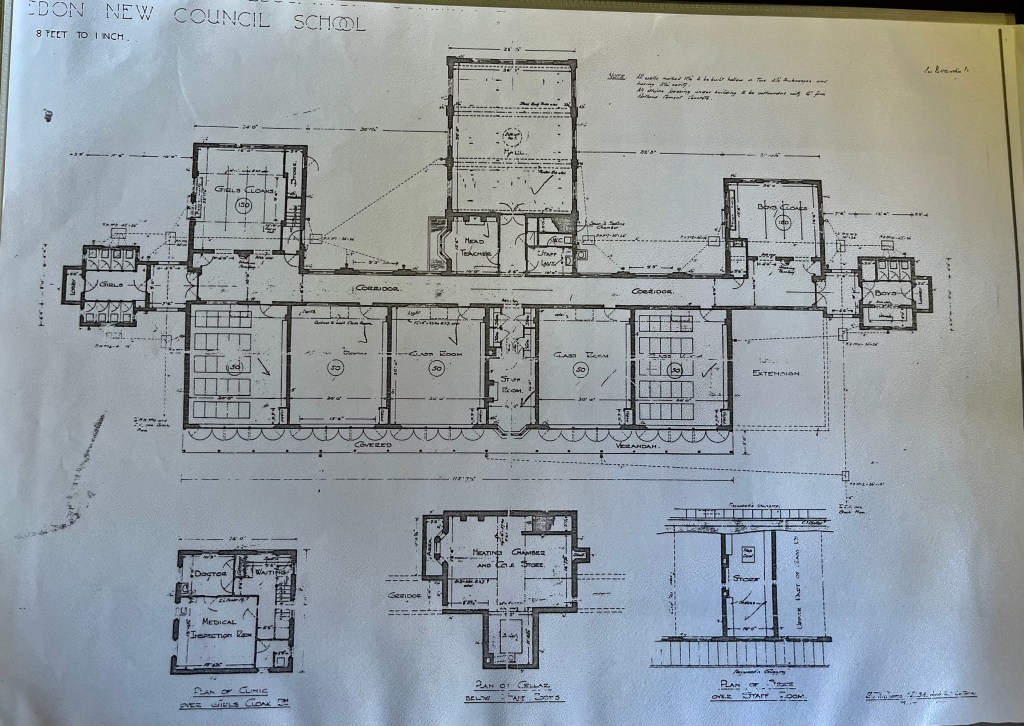
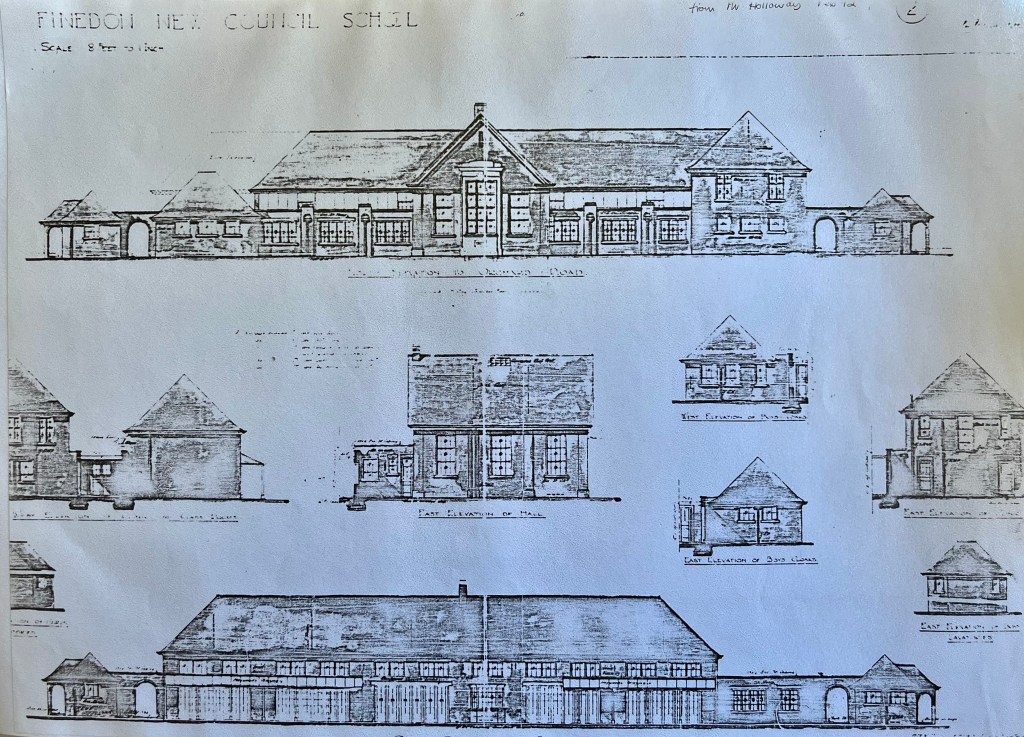
The Endowed Infant School would eventually return to Girls Charity School taking pupils from the north of the village, whilst those infants from the south of the village stayed at the Mulso School. The period between 1904 and 1922 saw several more very disruptive changes for those attending school in Finedon, which culminated in the planning and building of a New Infant School on land between the High Street and Orchard Road.Ironically, not all members of the school’s Management Board were for the need for a new Infant School and there was further disagreement concerning the site chosen. Initially there had been three potential sites. The first was utilizing a part of the recreation ground. The second was to take land owned by the gas works and the final and eventual selected site mentioned above on the High St.
~
~
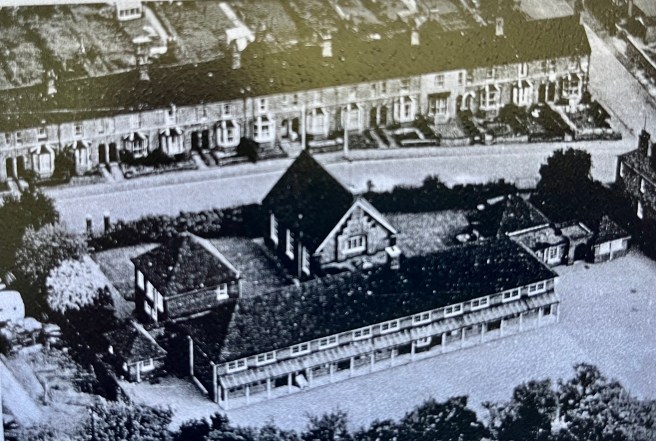
The newly built Finedon Infant School clearly showing the cottages of Lace Curtain Row in the background along Orchard Road.
~
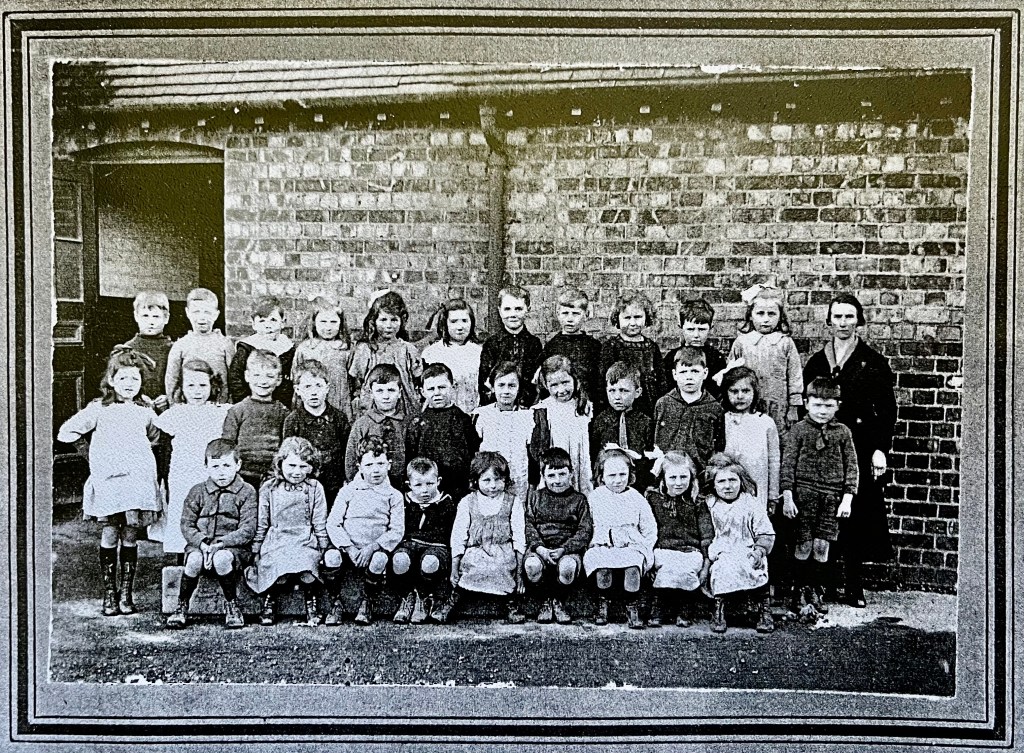
The Class of 1918
~
~
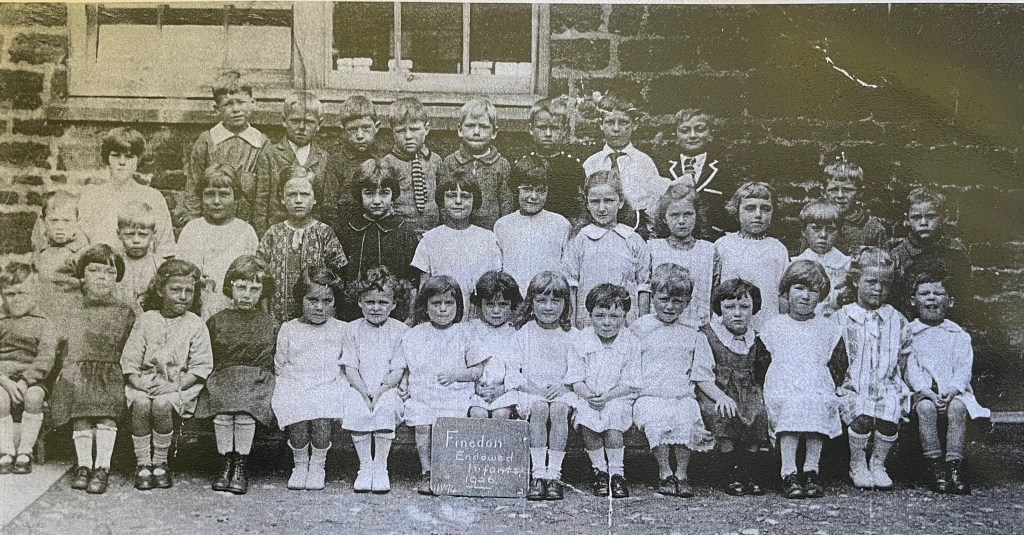
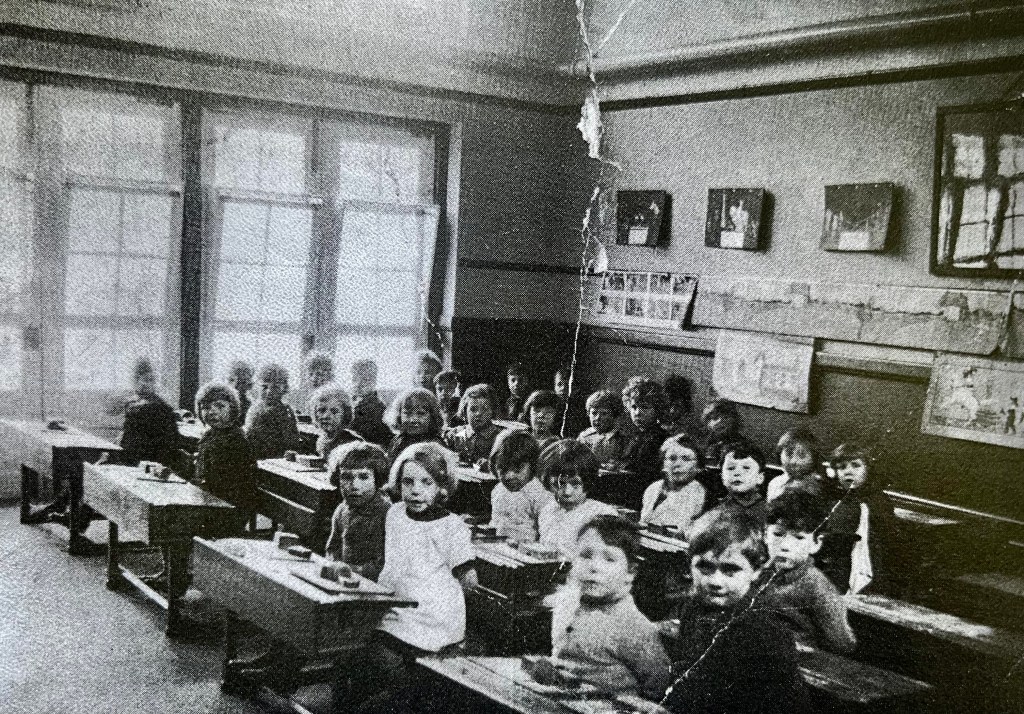
The Class of 1926
~
~
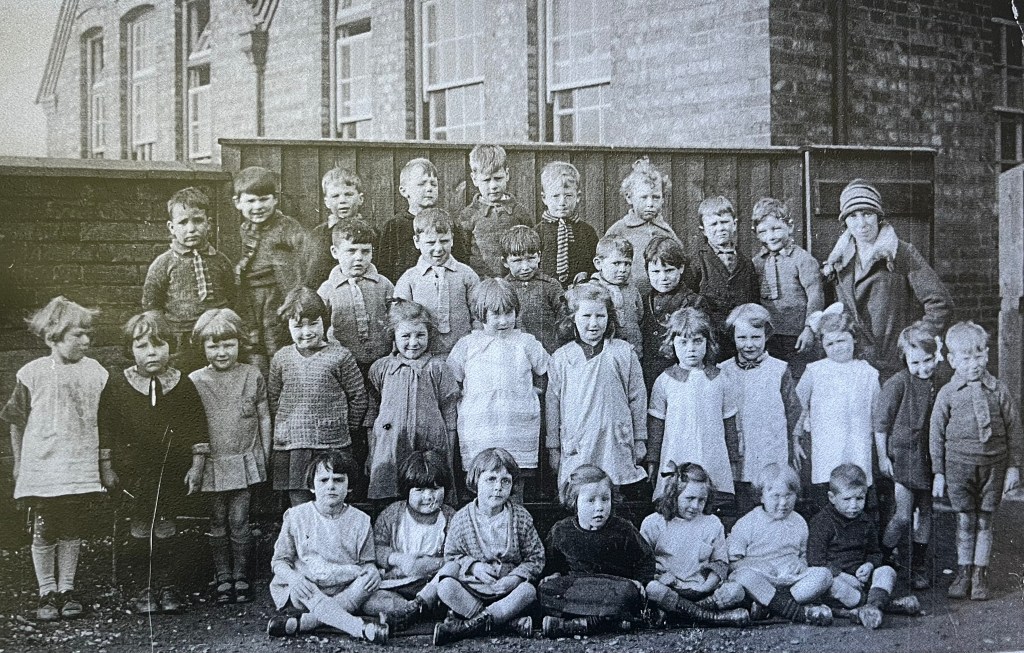
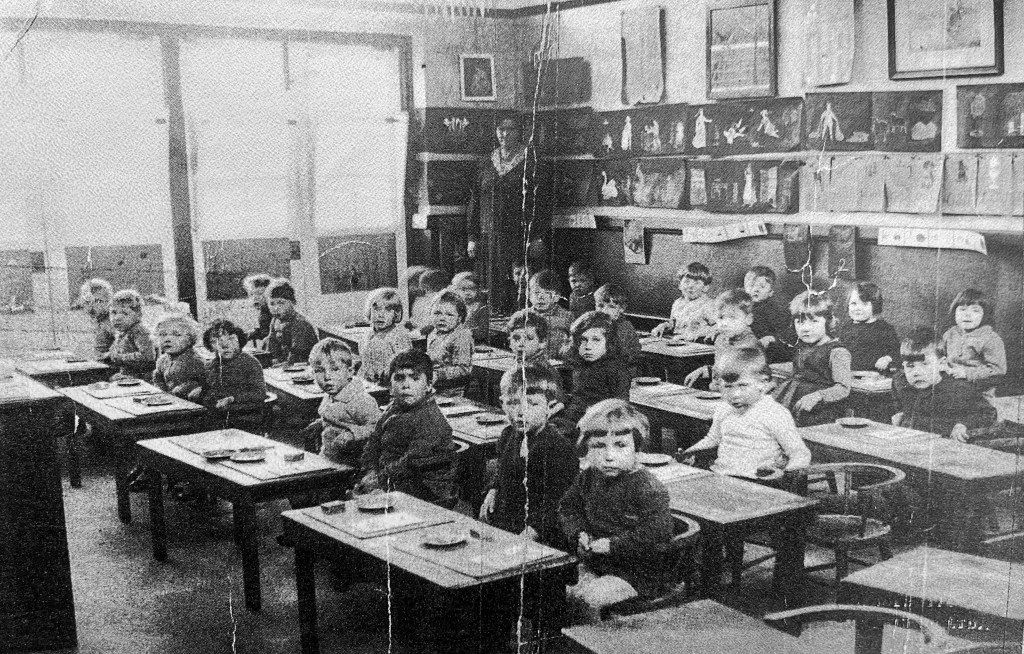
The Class of 1928
~
~
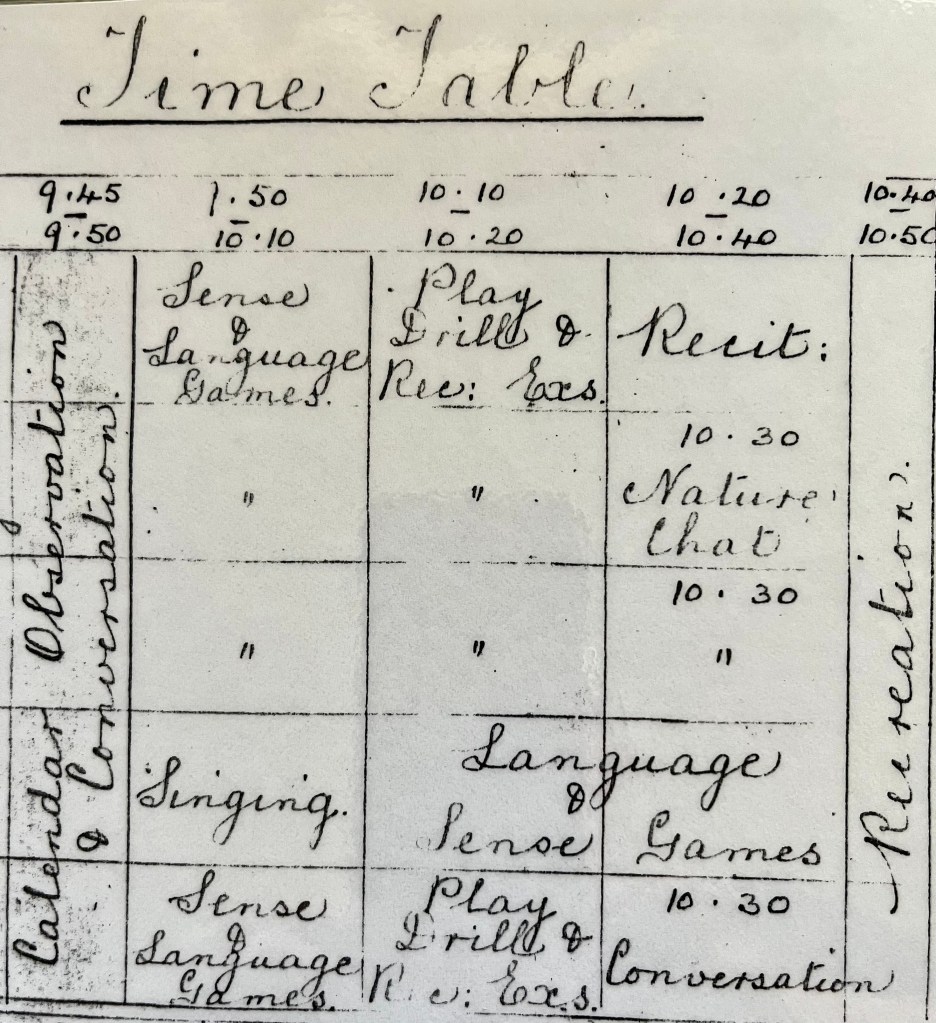
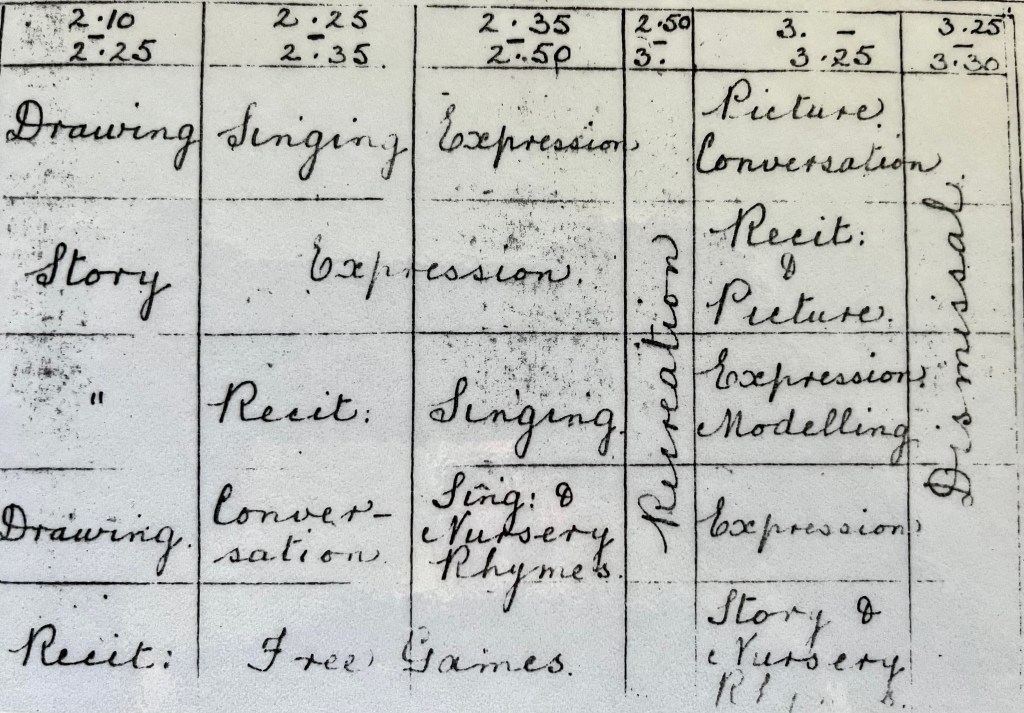
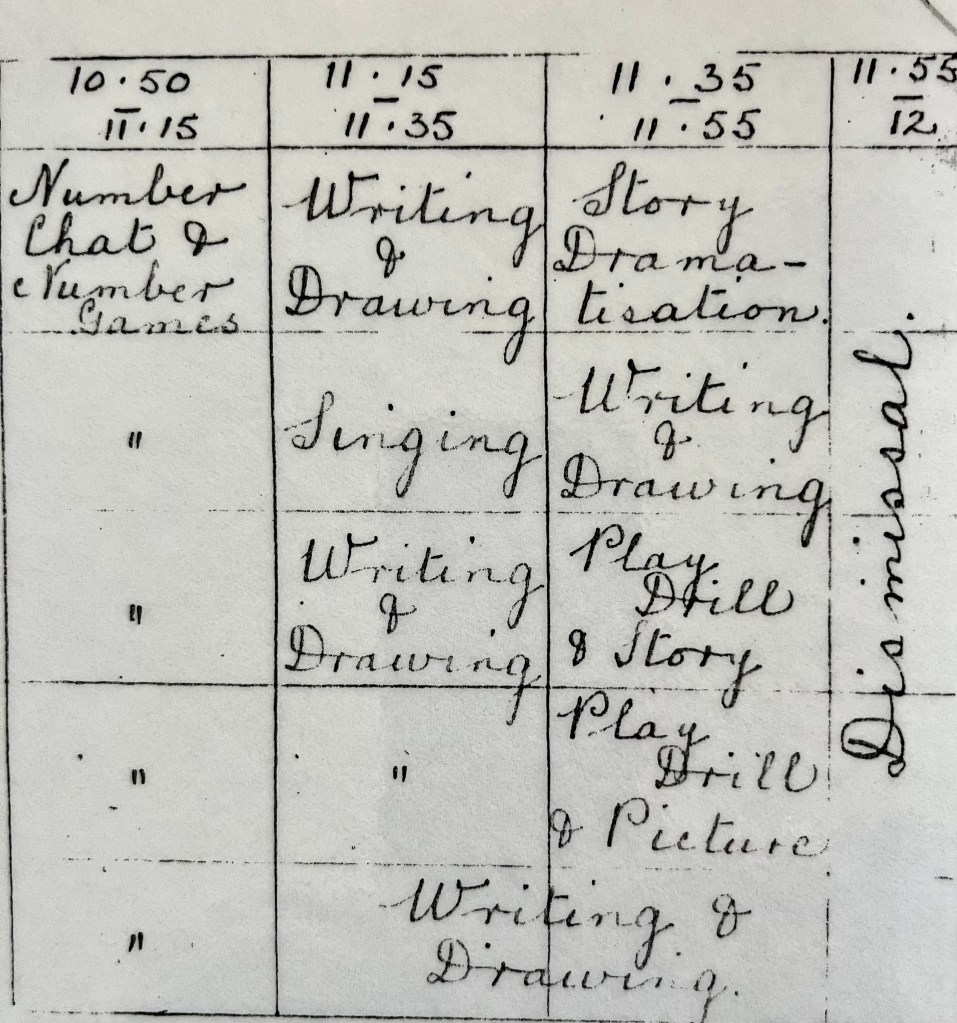
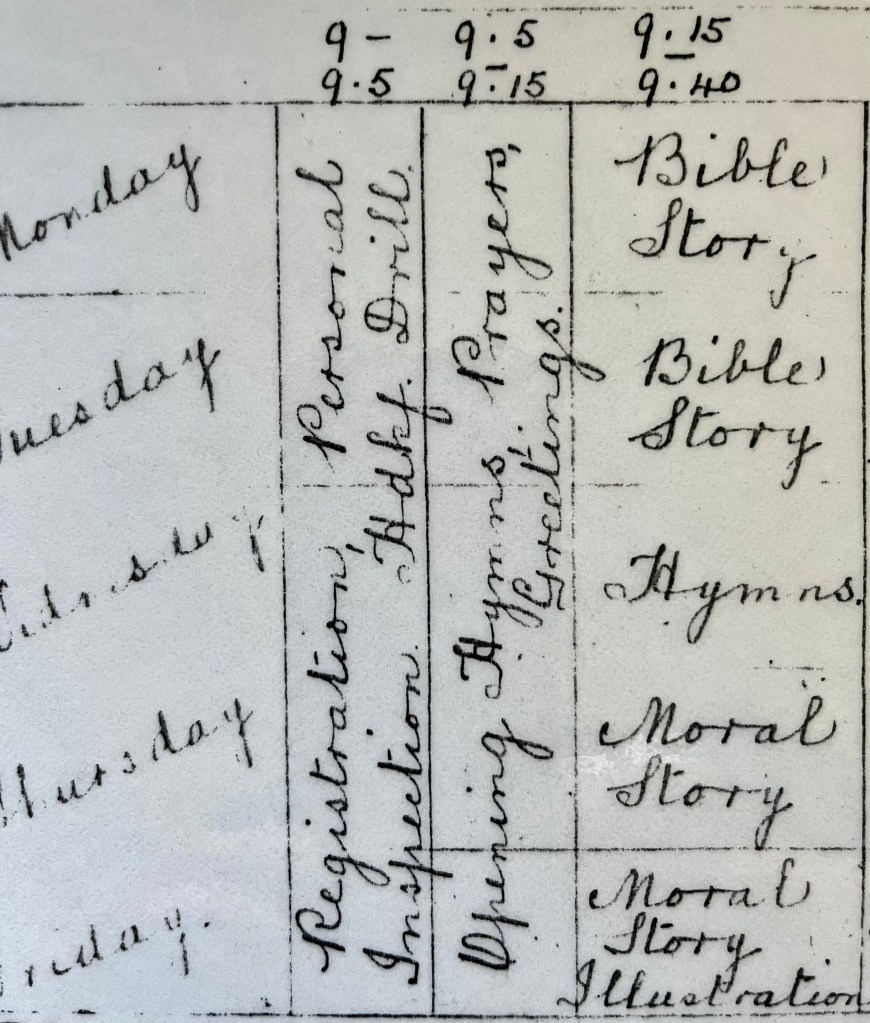
Copy of the Government Inspector’s Report forFinedon Independent C of E Infants School 1930
Inspected by Mr H R Sweeting
The Headmistress, in spite of the impending removal of all the children to the new Infants School, has continued to put the whole of her energy into her work. The schemes are planned with great care in details and continuity of method has been secured by the goodwill of both Assistant Teachers.
The foundation work is thorough and rather above the usual standard in attainment, number as before is best but reading and handwriting are both really good.
The school is free from fads but there is as much recreational work as can be arranged in the restricted space available. The physical training and rhythmic exercises seen were quite effective.
The quality of the handwork in the top class and the finish secured are most praiseworthy.
The children are cheerful, willing and have pleasant manners
October 9th 1930
~
The Class of 1931/32
~
The Class of 1933
~
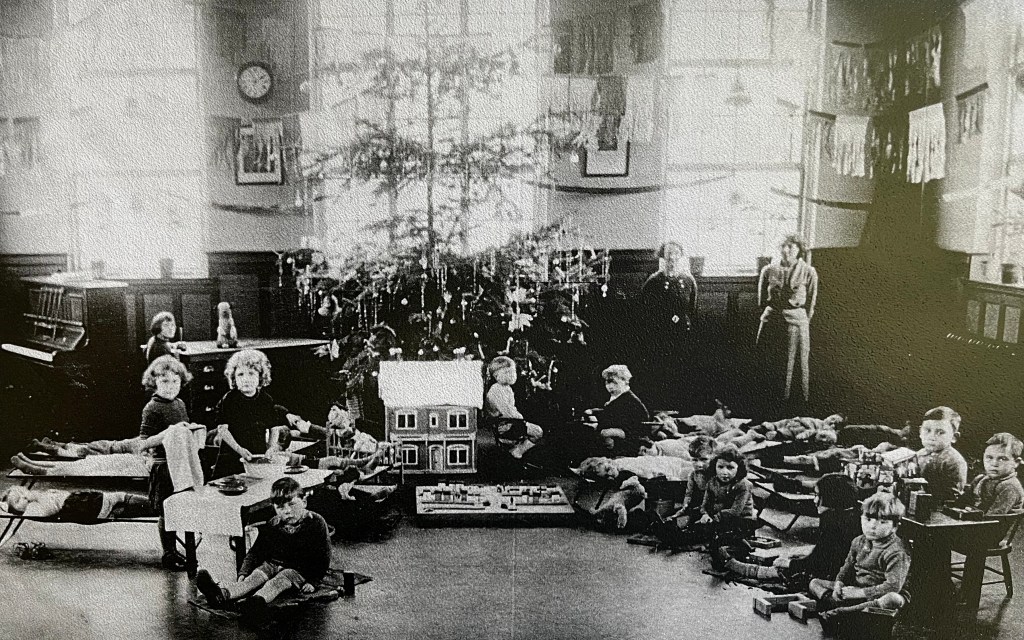
Christmas Decorations 1937
~
This article is still in construction, please revisit to see the complete version coming soon.
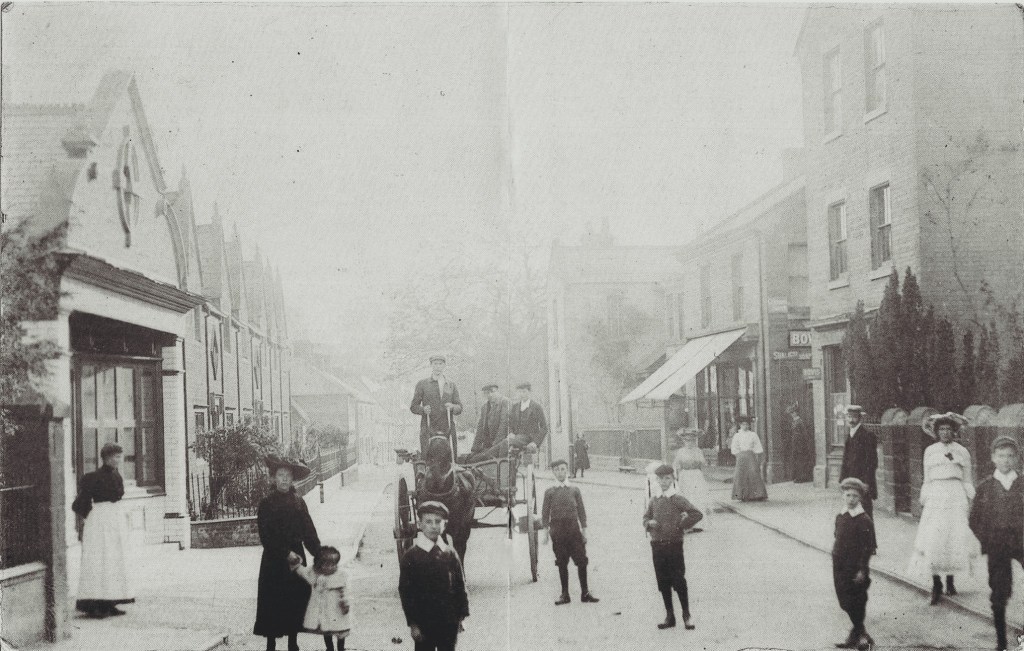
In the year 1900 the United Kingdom was in the Victorian era. However, within a year everything would change upon the death of queen Victoria which would usher in two new eras, The Edwardians and The Georgians.
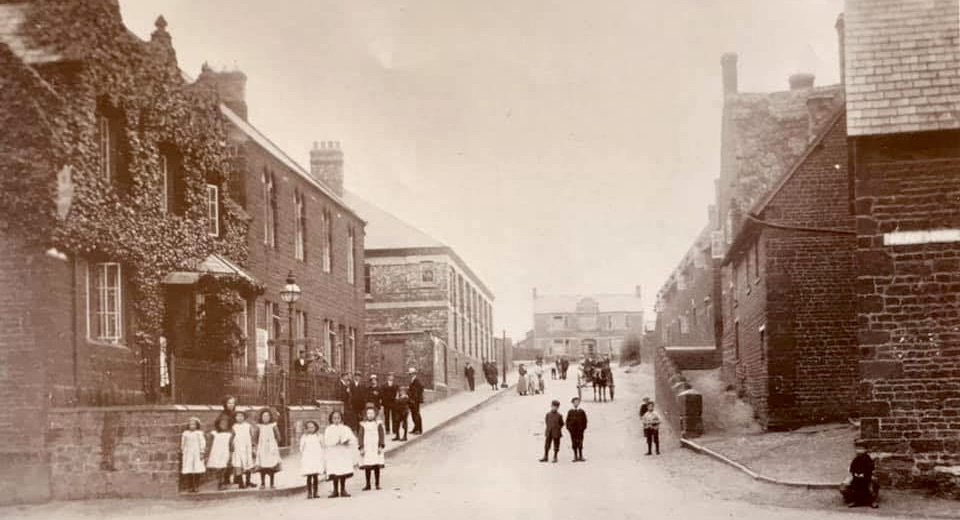
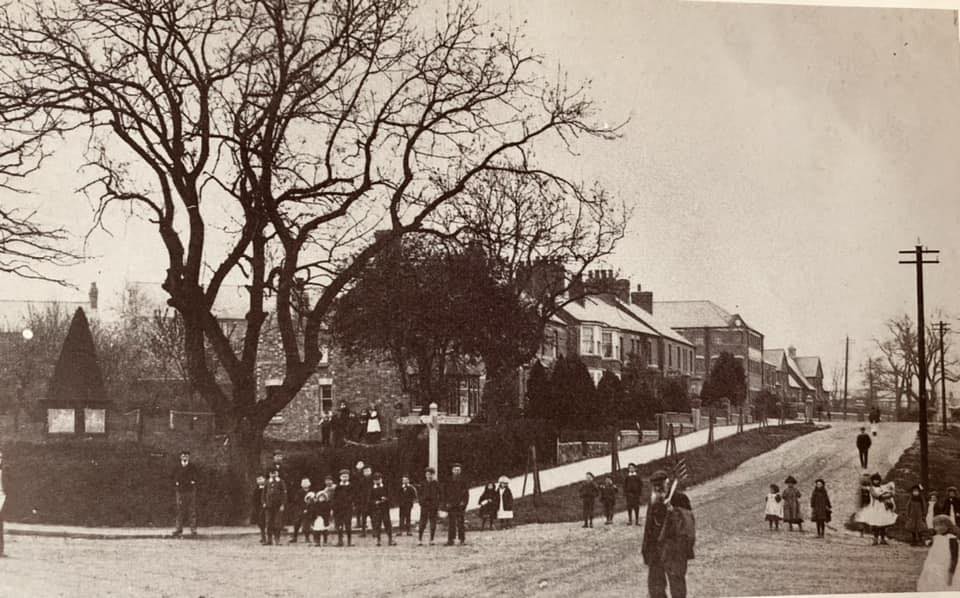
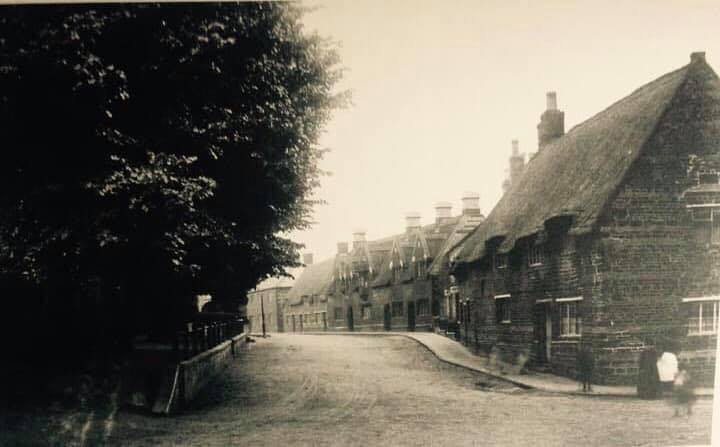
The photographs reproduced below span the first six years of this new era, often now seen as an Indian Summer of untroubled times of great innovation and for some a growing prosperity.
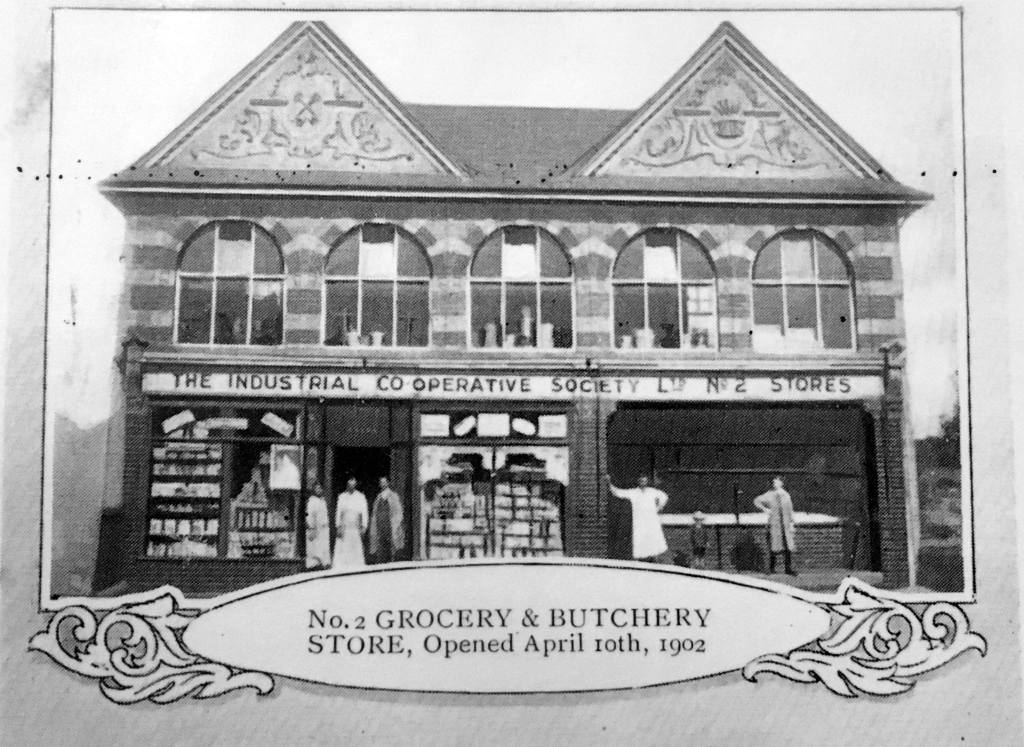
Below are Finedon Co-op 1902, Laws Lane 1903, Finedon Crossroads 1905, Lime Tree End 1903, Church St 1905, High St 1905 and an image of Finedon Parade 1905 in front of Bobby’s Entry Cottages.
The page image above is that of Hornsey’s Off License 1906
Finedon’s St Mary the Virgin Church is part of the Church of England, nowadays falling under the Diocese of Peterborough and within the Deanery of Higham, (a deanery helps in the coordination of pastoral care, common pastoral action, mutual support in the implementation of diocesan policies, the sharing of pastoral concerns, and facilitation of communication).
St Mary the Virgin is a Grade 1 listed building constructed of local ironstone and has a capacity for accommodating up to 350 parishoners. Constructed in what is termed ‘the decorated style’ it dates from circa the year 1350 and was originally owned by Croxton Abbey in Leicestershire. Its size is unusually large, being a parish church of such a small village (of no more than a few hundred inhabitants) as Finedon would have been at the time it was built.
It is thought most likely that the present Church was constructed by the monks of Croxton Abbey and its extravagant size indicates the importance of Finedon at that time. It is interesting to note that in 1291, Finedon, Higham Ferrers and Raunds were the three wealthiest benefices in the county of Northamptonshire.
(There is however a feasible suggestion that an earlier Norman church existed on the siteas the discovery of a stone font dating back to circa 1100 was discovered. It may also be of Saxon origin as Finedon was indeed an important Saxon meeting place).
St Mary’s is full of character with an impressive strainer arch, installed in the 14th or 15th century. The strainer arch was built across the nave to resist inward lateral pressure from the arches in the aisle. Other features have similarly impressive dimensions. The chancel measures 51 ft. by 21 ft., the north and south transept chapels are 31 ft. by 16 ft. The four-bay clerestoried nave measures 80 ft. by 20 ft. 6 in. and the north and south aisles are about 14 ft. 6 in. wide. The south porch, and west tower are 14 ft. 10 in. by 13 ft. 6 in, all these measurements being internal.
The pipe organ which was originally built for St George’s Chapel, Windsor was installed in 1717.
Above the porch is a small room known as the ‘Monks Cell’ containing the parish archives, together with a theological library of approximately 900 books that were donated by Sir John English Dolben in 1788. Whilst he original stairway from the south aisle is blocked, access to the chamber is now by an external stair turret added in 1794.
A further external stair turret can be found on the north side of the church at the junction of the nave and chancel. This originally led to a rood loft and onto the roof. The church tower and spire were built about fifty years after the main church building. It contains a peal of eight bells, a full octave in the key of D. The oldest bell dates from 1639 and has the inscription: ‘AS IN ADAM ALL DIE, SO IN CHRIST SHALL ALL BE MADE ALIVE’
The original clock (dated 1733) struck only the time but had no dial and was replaced by the present clock mechanism in 1876. Overall, the tower and spire rise to 133 feet above the ground, the steeple being struck by lightning in 1897 requiring a rebuild.
The Dolben vault, constructed to house the remains of the Dolben family c1710 is situated at the east end beneath the high altar. The only entrance is from outside and access is via a ladder. It is protected by iron railings and locked gates.
Although there are a few surviving medieval pews at the rear of the nave the rest were installed in 1858 during a general restoration. The chancel screen also dates from this time, the original believing to have been destroyed by Cromwell’s men. It was during this restoration that the font (previously mentioned) was rescued from nearby field, where it had been used as a cattle trough. The carvings on the font had been severely damaged and subsequently surrounded by painted woodwork to cover the mutilation. For some reason it was removed in 1837 and a new font installed but 21 years later it was back in its original pride of place.
Throughout its history eight Rectors and fifty-three Vicars have served as incumbents. 2024 saw the town welcome its 54th incumbent Vicar to the parish. The longest serving incumbent was the Revd George Paul, who was installed in 1848 and loyally served the parish for over 60 years.
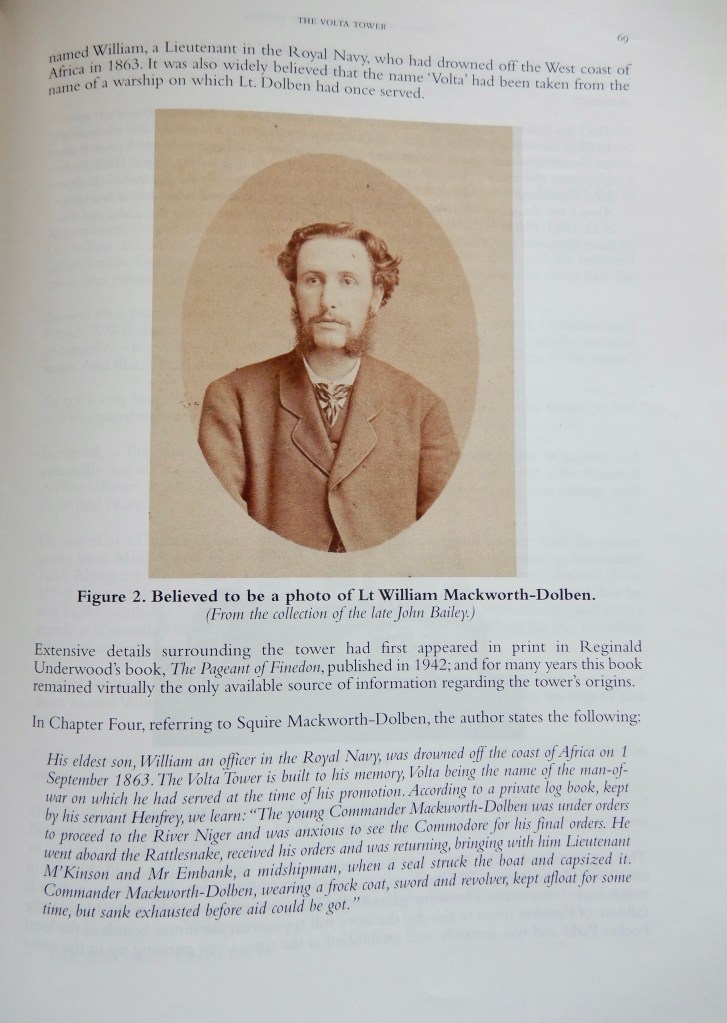
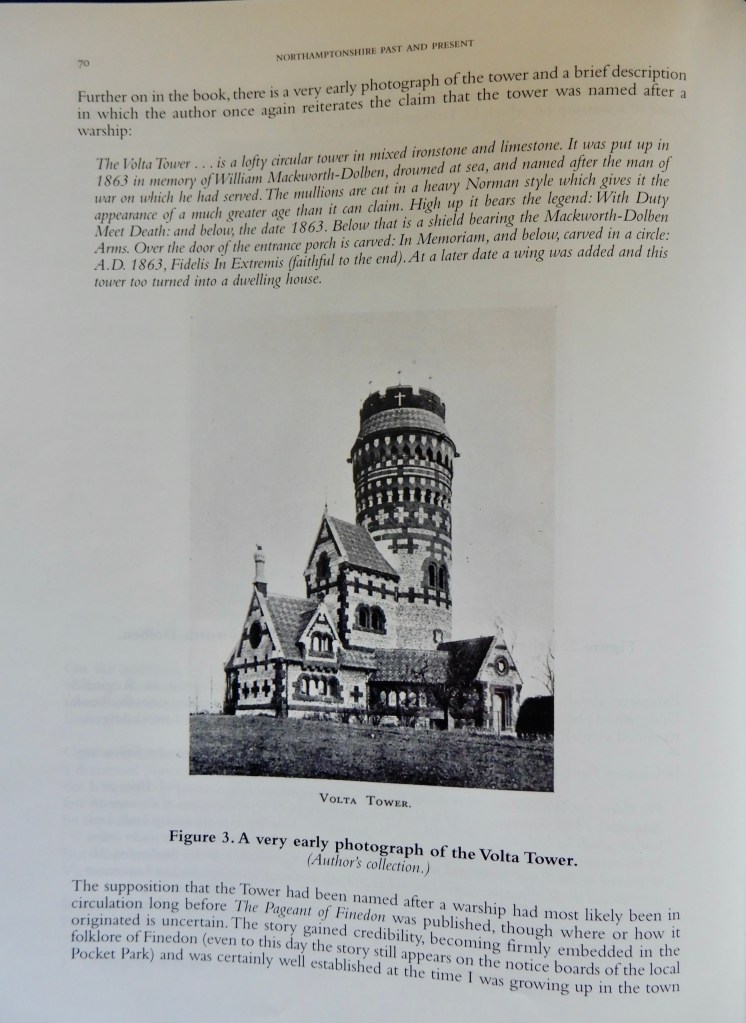
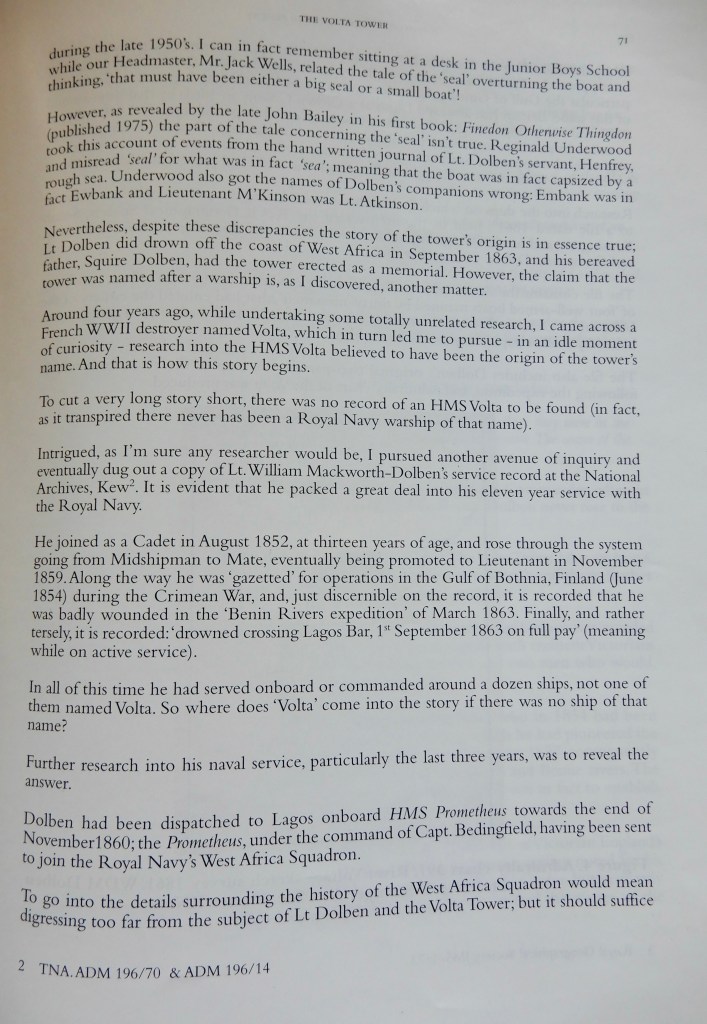
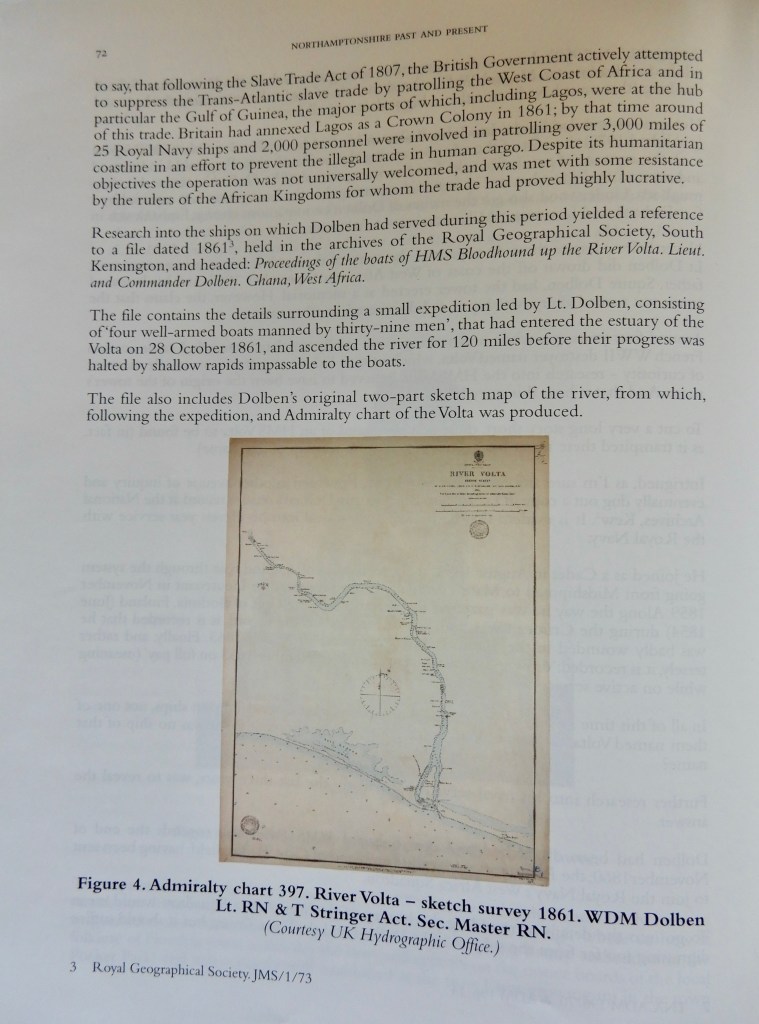
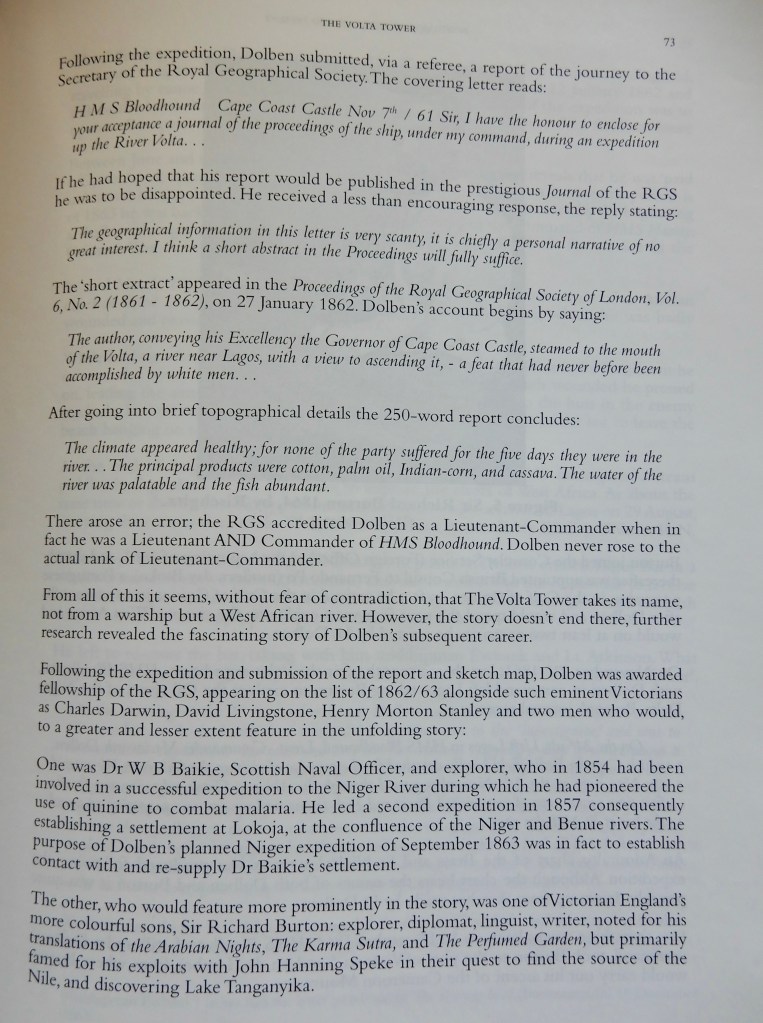
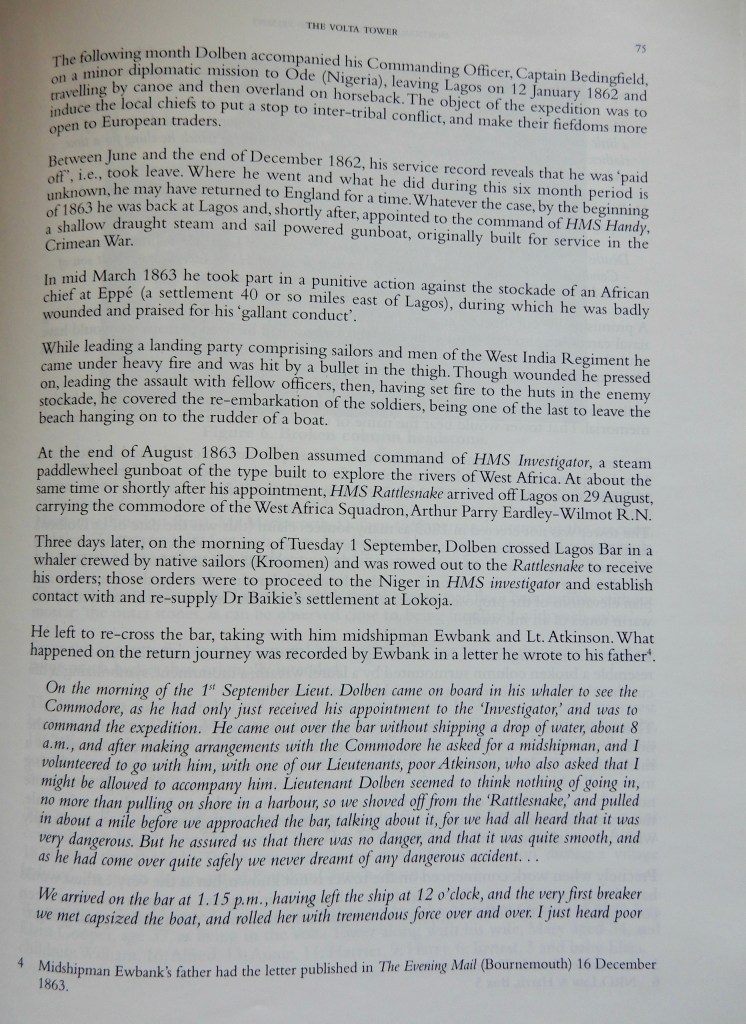
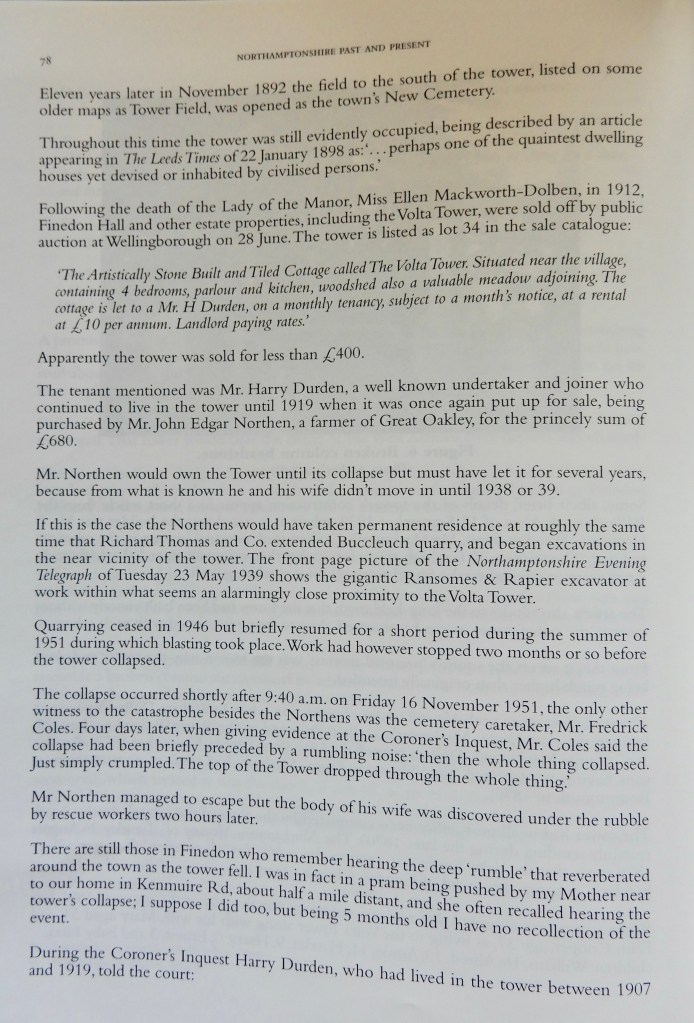
The Finedon Local History Society are delighted to have been given permission to reprint a comprehensive article written by Ron Clayton concerning the building of the Volta Tower and accompanying biography of Lt William Mackworth-Dolben.
This article originally featured in Northamptonshire Past and Present No 71 in 2018 associated with the Northamptonshire Record Society. The article has been reproduced by photographing the original and therefore some pages may appear to be out of alignment.












 From Tingdene to Finedon