On behalf of the Finedon Local History Society, I would like to wish all ‘Finedonians’ a very Merry Christmas and a Happy and Prosperous New Year in 2025
It has been said, that at one time it was possible to note where a local hailed from (be that Irthlingborough, Burton Latimer or Finedon) from by listening to the particular terms and expressions he/she used whilst conversing, usually whilst out and about in the street.
In order to preserve and make some sort of list of these wonderful terms we list here some of those donated by current residents, I am sure that many more will come to light in due course and will of course be added to this Finedon dictionary of sorts.
They are listed in alphabetical order with some liberties taken where necessary.
‘Air and ‘Ere(as in ‘air dad or ‘ere mum, used instead of our).
~
‘Apenny on Himself/Herself’(someone who thinks they’re better than someone else, a show-off).
~
Benefit(as in take your coat off indoors or you won’t feel the benefit when you go outside).
~
Black over Bill’s Mothers(denoting poor weather on the way).
~
Bottom End or Top End (relating to the old part of Finedon close to the church, and the newer parts built after the war).
~
Chelp(backchat or complaining verbally as ‘stop yer chelping’).
~
Chopsin(talking, gassing or gossiping ie, using one’s mouth or ‘chops’).
~
Doolalee(one of many localisms for acting daft or silly, of Indian origin brought back by returning army troops).
~
Down Street(going out to local shops, no actual destination mentioned).
~
Dunky’s Years(a considerable length of time).
~
Ent Kent Shent Wunt and Ennagunoo(brilliant vernacular saying for a refusal to do something replacing the words isn’t, can’t, won’t and aren’t going to).
~
Fur Coat no Knickers(can be used in a variety of ways often meaning, not all it appears to be or someone overdressed or acting above themselves).
~
Frit(to be frightened).
~
Gawping(having a ‘nose’ at something/someone or taking a very long look).
~
Gone for a Burton (as in to denote something or someone has come to grief or crashed etc).
~
Mardy Arse(having a strop or being overly cantankerous).
~
Mullocks or Mullocky(a somewhat unsavoury state of affairs or dirty/untidy conditions).
~
Old Boy(used to denote youth not old age, as in our young old boy),
~
Peps(sweets often those sold loose in the old days, as in a quarter of peps).
~
Shallata goo me duc(I will have to go now or I’ll be late).
~
Skek ‘um up(as heard during a raffle, as in shake the bag of tickets up).
~
Skewwiff (something or a piece of clothing not on straight or lying right).
~
Spruce(any flavoured soft drink as in a bottle of Spruce).
~
Tar(a colloquial thank you).
~
The Glue Blot(colloquial reference to the Conservative Club).
~
Tied up ugly(usually used to denote a scruffy or dishevelled person or thing, as in a sack of ‘cack’ tied up ugly).
~
Here are some composite phrases
‘shent tek me coat off I ent goin fur’.
‘there cat run up ‘er entry’.
‘carry on bawling and oyl giv ya somat to bawl about’.
‘yer neither use nor ornament’.
‘d’year? leave me dug ubee’.
‘eat yer buppy an dawnt roar’.
‘gooin air gate for a holiday’.
‘gooin up the wooden Hill to Bedfordshire’.
‘gunna t’ek the dug for a walk’.
‘tizz en it’.
‘sonsin about like a kelly on a string’.
‘anybody’d think you’d got St Vitis Dance boy’.
‘use yer nassum boy’.
‘nip round Swannies and get me twenty fags and pay the papers’.
‘for Christ sake, act sharp’
‘What yer got there, a bag o’ mullocks’.
‘kent stop gassing, I’ve got summat on the stove’.
‘don’t be an ugg’.
‘gooing down the garden field’
‘wer you ent arf sharp’.
‘it dorn’t do to say too much’
‘kent wunder ad’it this bloody weather
‘om frit te death ov ‘im and ‘er.
‘dorn’t thro that away, I’ll av the noggy’.
‘I’ll goo to the foot of ‘ere stairs’.
“dunt matta what they call y me duck, as lung as they dunt call y too late fur yur dinna!”
Digby Augustus Stewart Mackworth Dolben was born on 8th February 1848 on the island of Guernsey but spend most of his short but formative years at Finedon Hall.
He was the son of William Harcourt Isham Mackworth, 1806-1872, himself the younger son of Sir Digby Mackworth, (the third baronet) who added the additional surname Dolben following his marriage to Frances, heiress of Sir John English Dolben.
Digby was educated firstly at Cheam School and subsequently at Eton College under the influential Master William Johnson Cory. Cory both inspired and nurtured Digby’s poetic aspirations by having produced a collection of poems himself entitled ‘Ionica’.
Perhaps a more significant source of inspiration was derived from that of his cousin Robert Bridges, who would later hold the prestigious accolade of Poet Laureate from 1913 to 1930. Being older than Digby, Bridges took him under his personal tutelage so to speak.
A Song
The world is young today:
Forget the gods are old,
Forget the years of gold
When all the months were May.
A little flower of Love
Is ours, without a root,
Without the end of fruit,
Yet ― take the scent thereof.
There may be hope above,
There may be rest beneath;
We see them not, but Death
Is palpable ― and Love.
Digby’s behaviour during his early schooldays and adolescence was both controversial and to some degree rather scandalous. He developed a romantic attachment to another older boy, Martin Le Marchant Gosselin and wrote several love poems to him. He also began to follow the doctrine of an English theologian, Dr E B Pusey, who advocated the revival of the Catholic doctrine in the Church of England. This being totally opposite to Digby’s staunchly Protestant upbringing.
However, perhaps Digby’s most outrageous affectation was his assumed allegiance to the Order of St Benedict and a considered conversion to Roman Catholicism which occasionally entailed him wearing a monk’s habit, going barefoot and calling himself Brother Dominic, which obviously caused much embarrassment to his family.
Sadly, around this time, 1863, Digby, in an unfathomable fit of pique, destroyed all his poems by burning them, in what Robert Bridges called a “holocaust.”
Poppies
Lilies, lilies not for me,
Flowers of the pure and saintly―
I have seen in holy places
Where the incense rises faintly,
And the priest the chalice raises,
Lilies in the altar vases,
Not for me.
Leave untouched each garden tree,
Kings and queens of flower-land.
When the summer evening closes,
Lovers may-be hand in hand
There will seek for crimson roses,
There will bind their wreaths and posies
Merrily.
From the corn-fields where we met
Pluck me poppies white and red;
Bind them round my weary brain,
Strew them on my narrow bed,
Numbing all the ache and pain.―
I shall sleep nor wake again,
But forget.
It was on his seventeenth birthday in 1865 that Digby Dolben’s poetic journey reached an important milestone. Robert Bridges introduced Digby to Gerard Manley Hopkins, nowadays considered to be one of England’s greatest poets of the Victorian era. In the words of Hopkins’s biographer Robert Bernard Martin, Hopkins’s meeting with Digby Dolben, “was, quite simply, the most momentous emotional event of his undergraduate years, probably of his entire life”.
Hopkins was completely taken with Digby, who was nearly four years younger than he, using his private confession journal to illustrate his suppressed erotic thoughts of him.
He maintained a correspondence with Digby, writing about him in his diary, also composing two poems about him, “Where art thou friend” and “The Beginning of the End.”
Two years later on May 2nd 1867, Digby Dolben fainted during his Oxford University entrance exams thus, failing them. In order to re-attempt qualification he travelled to meet a new tutor. Digby Dolben tragically drowned on the 28th June 1867 in the River Welland whilst bathing with the ten-year-old son of his new tutor, Rev. C. E. Prichard, the Rector of South Luffenham in Rutland. Digby was then aged only 19 and never completed his preparations to go up to Oxford University.
Enough
When all my words were said,
When all my songs were sung,
I thought to pass among
The unforgotten dead,
A Queen of ruth to reign
With her, who gathereth tears
From all the lands and years,
The Lesbian maid of pain;
That lovers, when they wove
The double myrtle-wreath,
Should sigh with mingled breath
Beneath the wings of Love:
‘How piteous were her wrongs,
Her words were falling dew,
All pleasant verse she knew,
But not the Song of songs.’
Yet now, O Love, that you
Have kissed my forehead, I
Have sung indeed, can die,
And be forgotten too.
Robert Bridges guaranteed Digby Dolben’s reputation by publishing a book simply called Poems by Digby Mackworth Dolben (1911) all of which must have been written in only a three-year period following the burning of his previous collection and with his inclusion in the publication of Three Friends: Memoirs of Digby Mackworth Dolben, Richard Watson Dixon, Henry Bradley (1932). Subsequently, a publication titled The Poems and Letters of Digby Mackworth Dolben 1848–1867 was produced in 1981
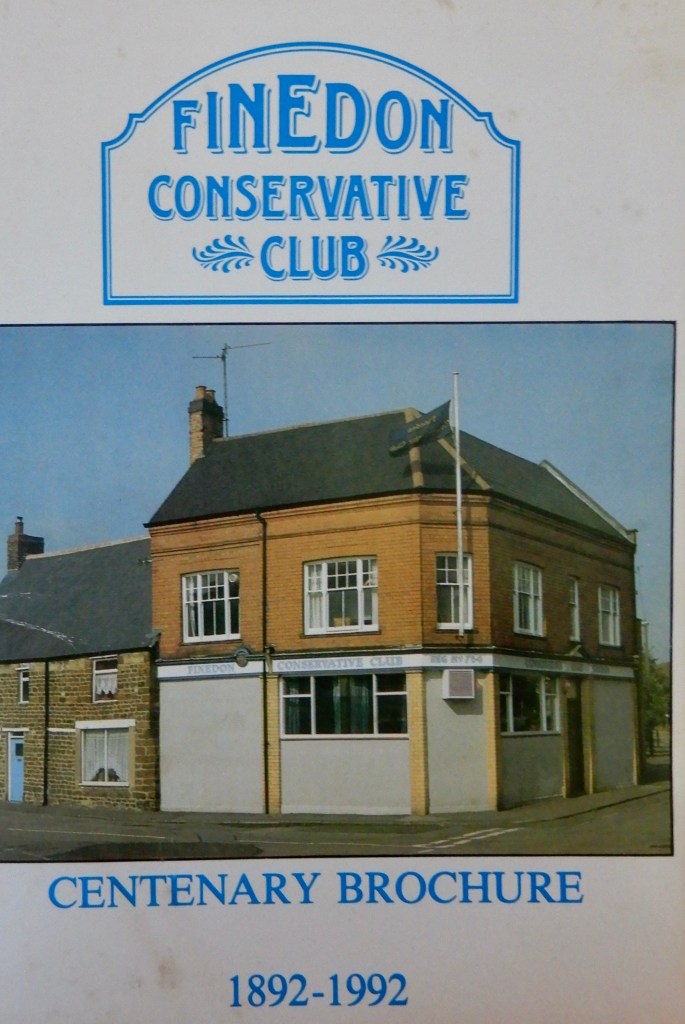
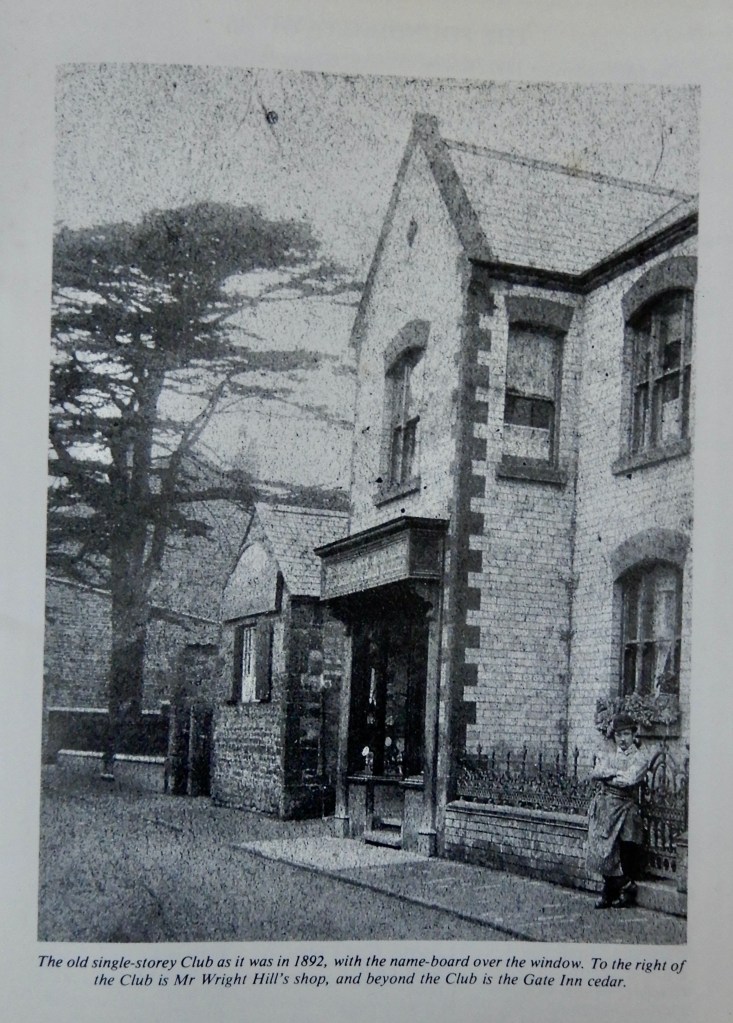
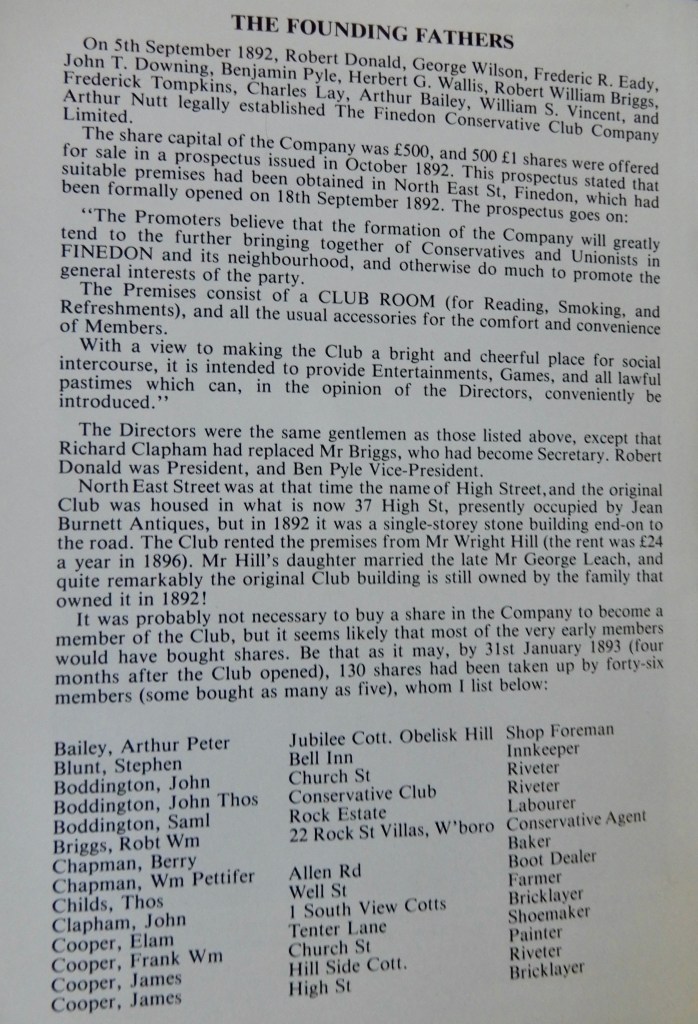
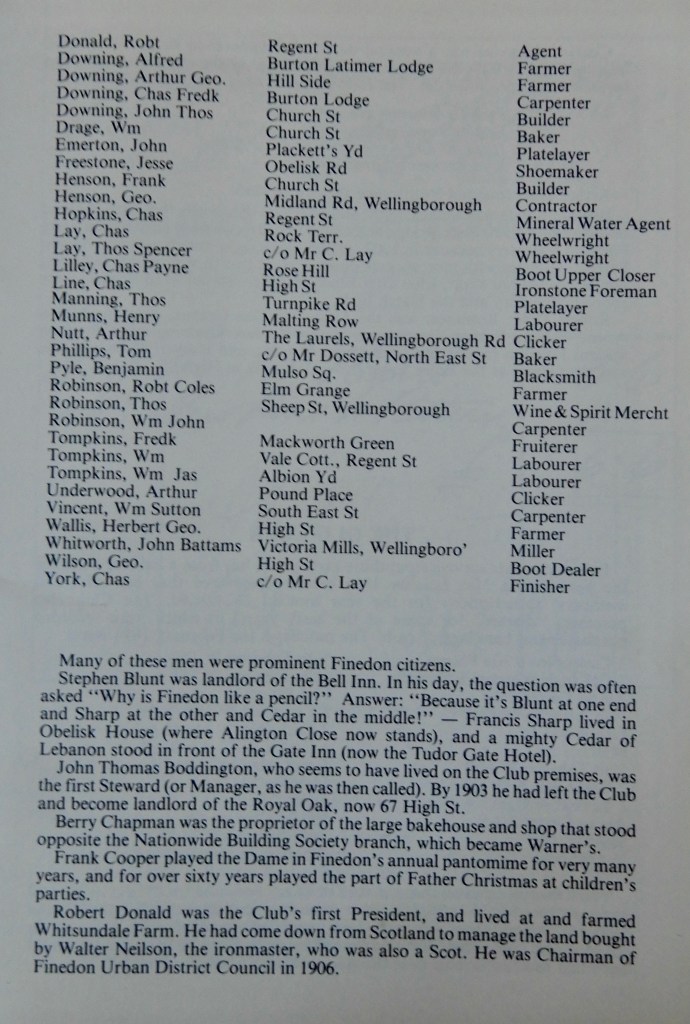
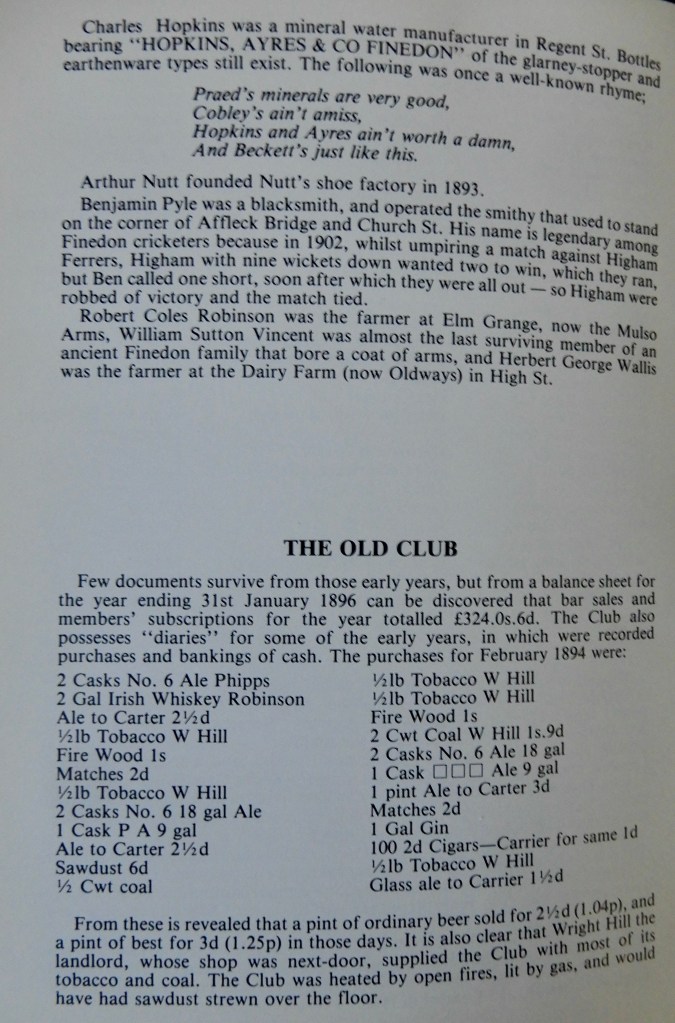
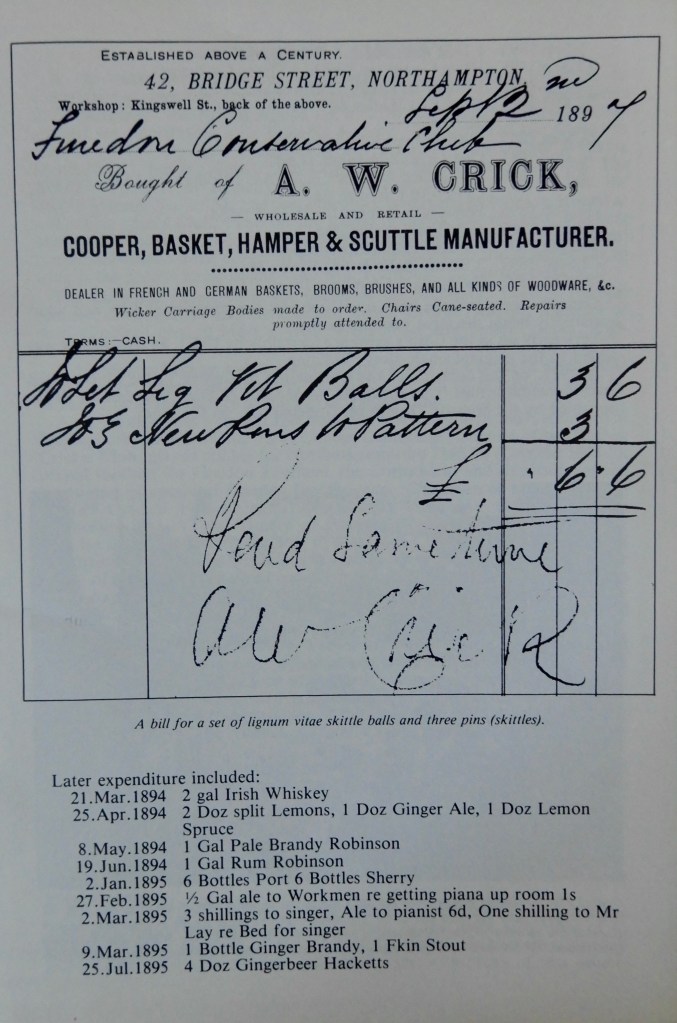
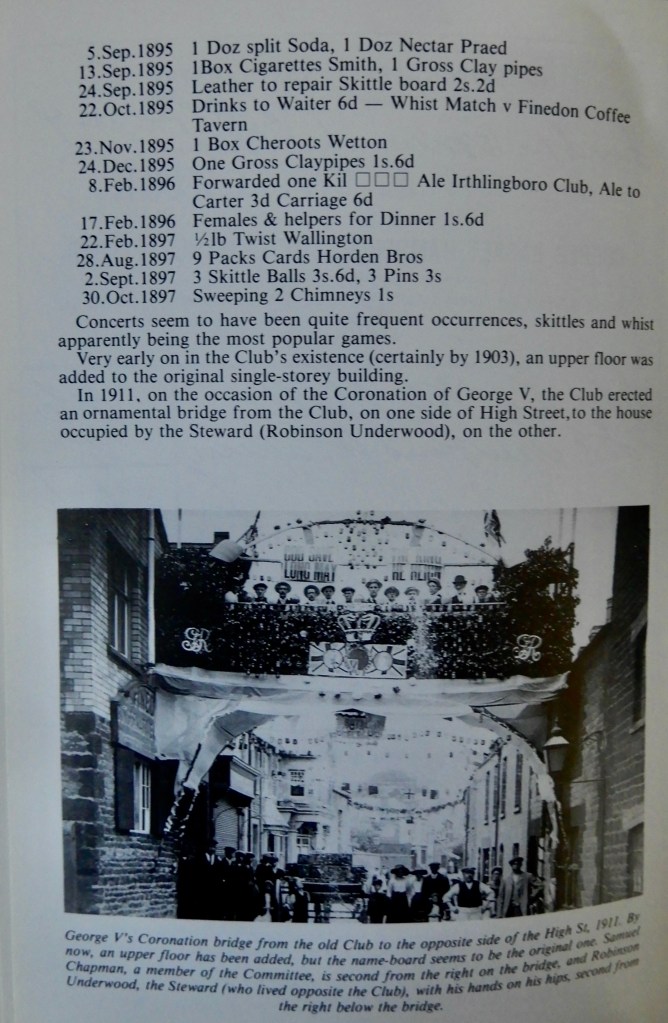
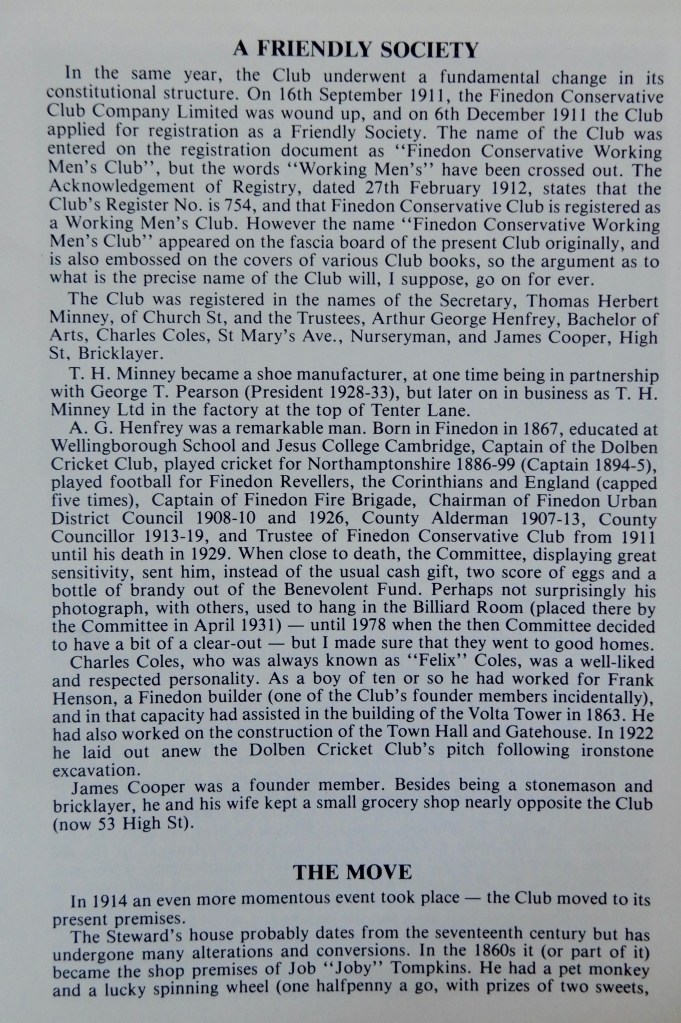
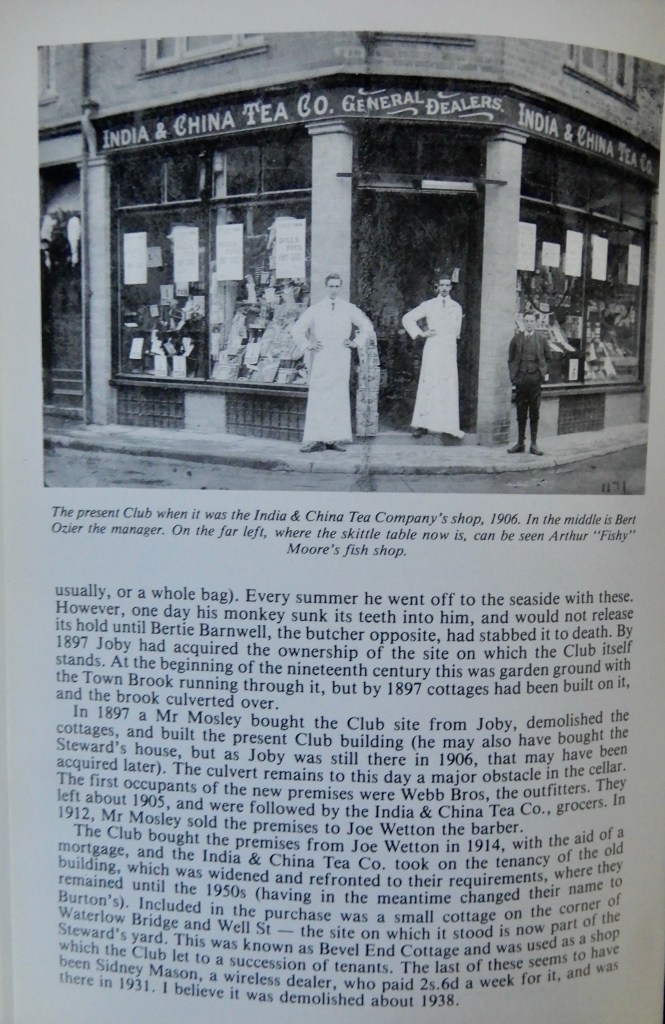
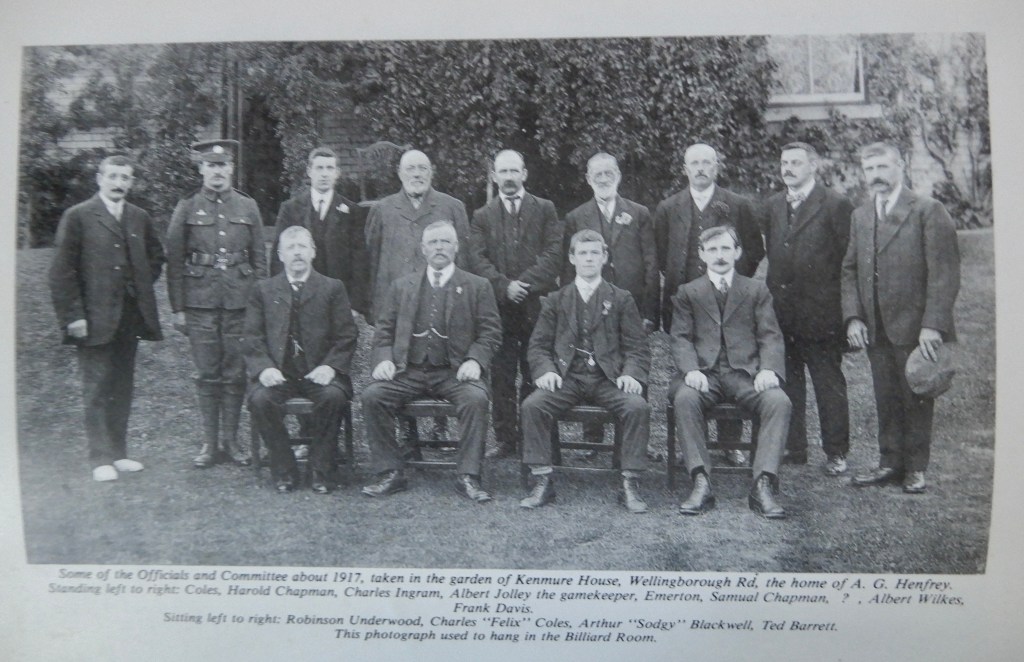
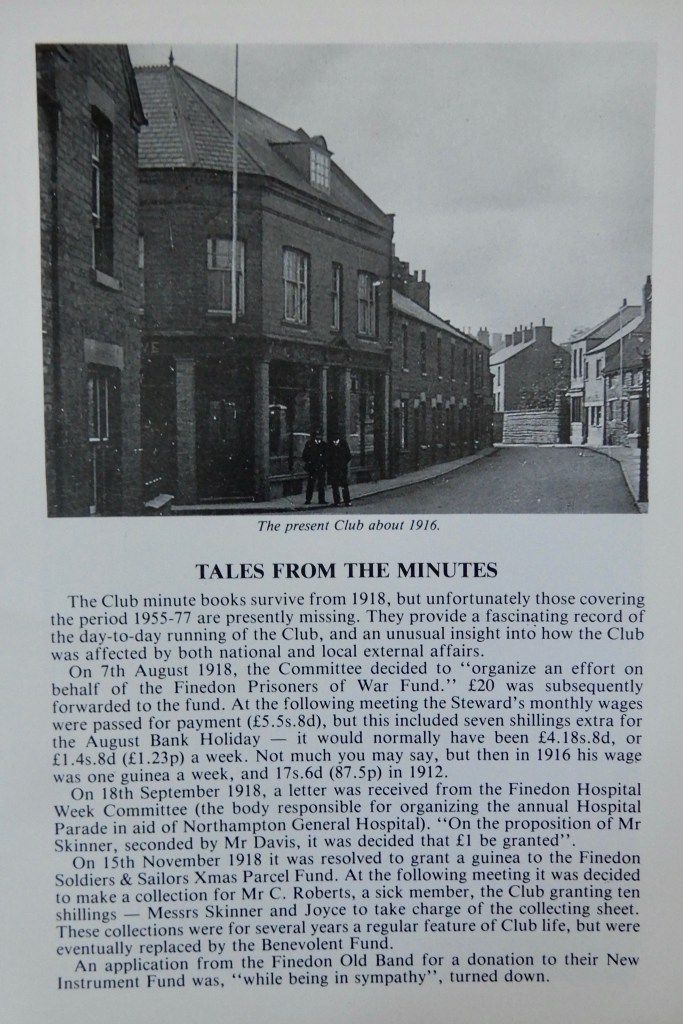
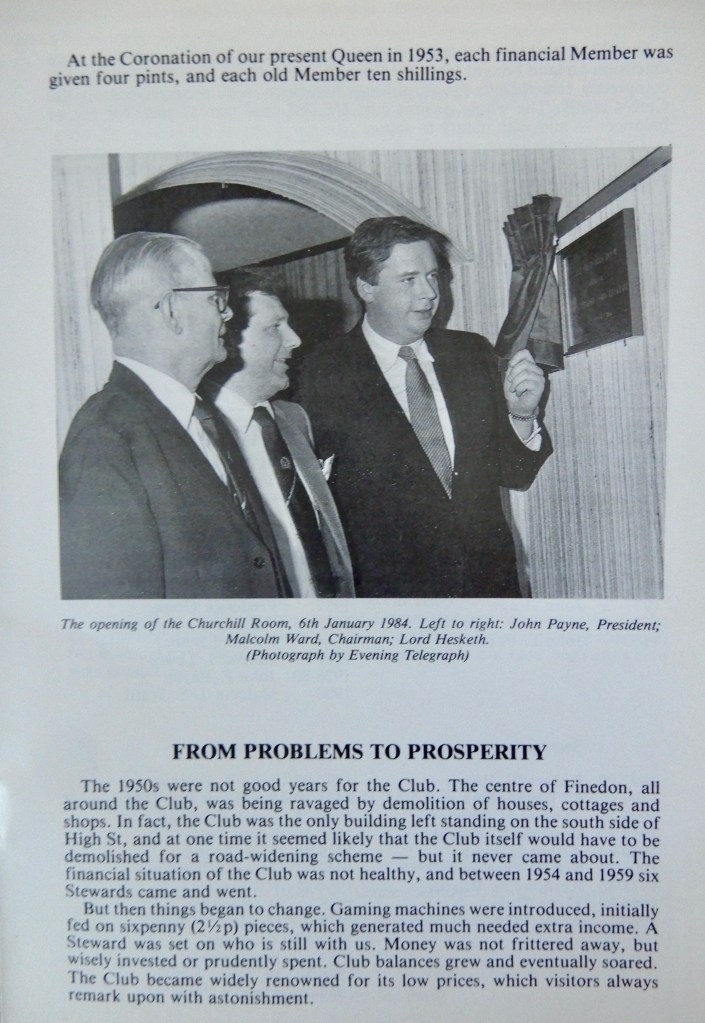
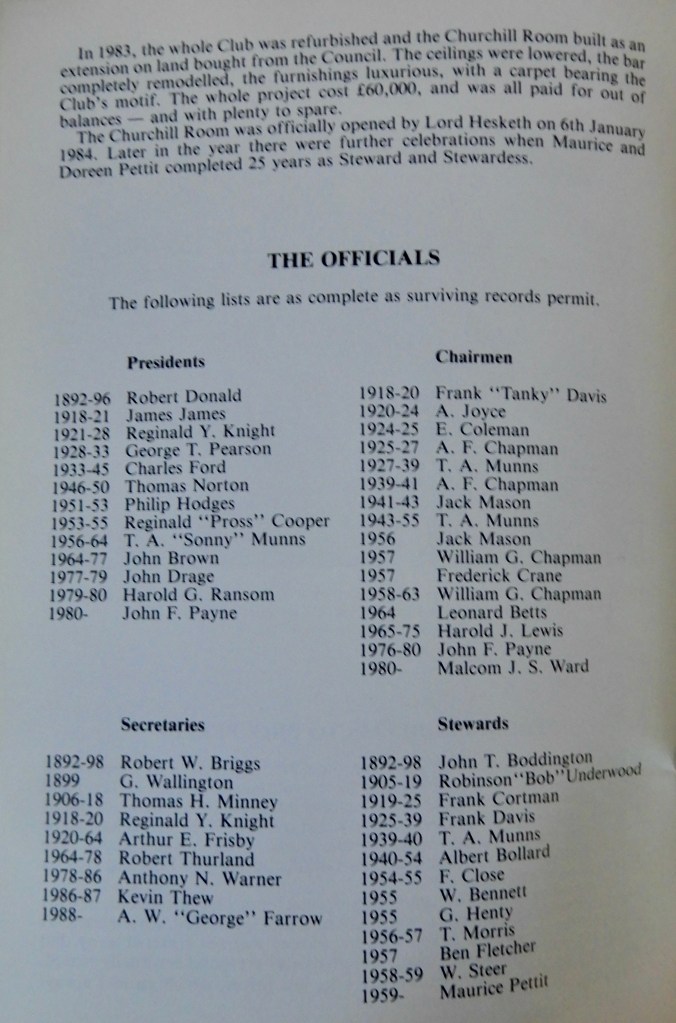
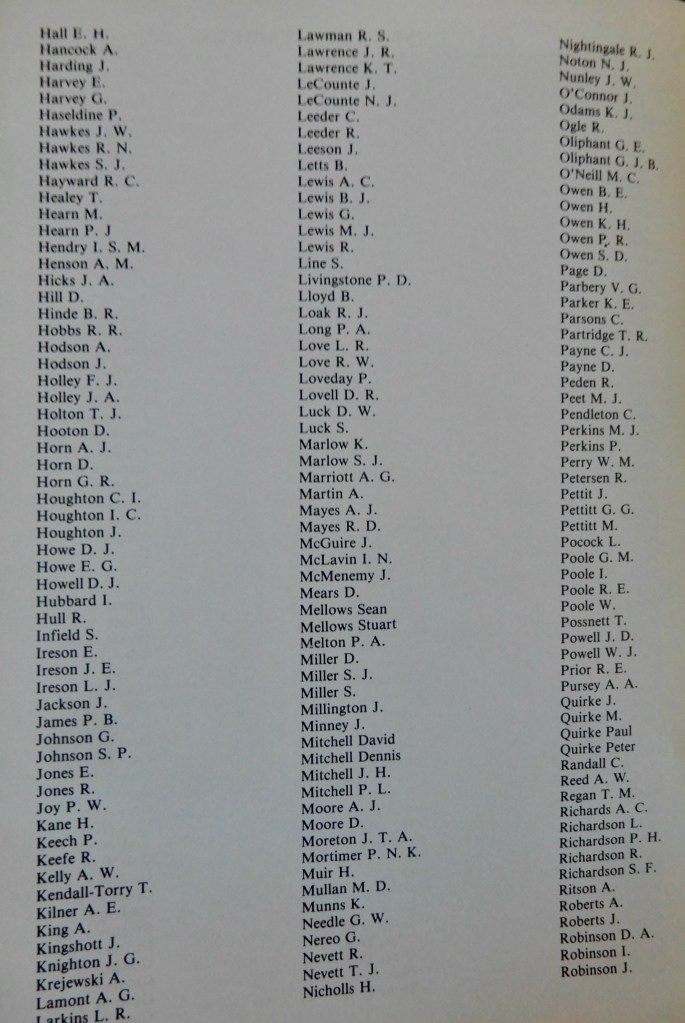
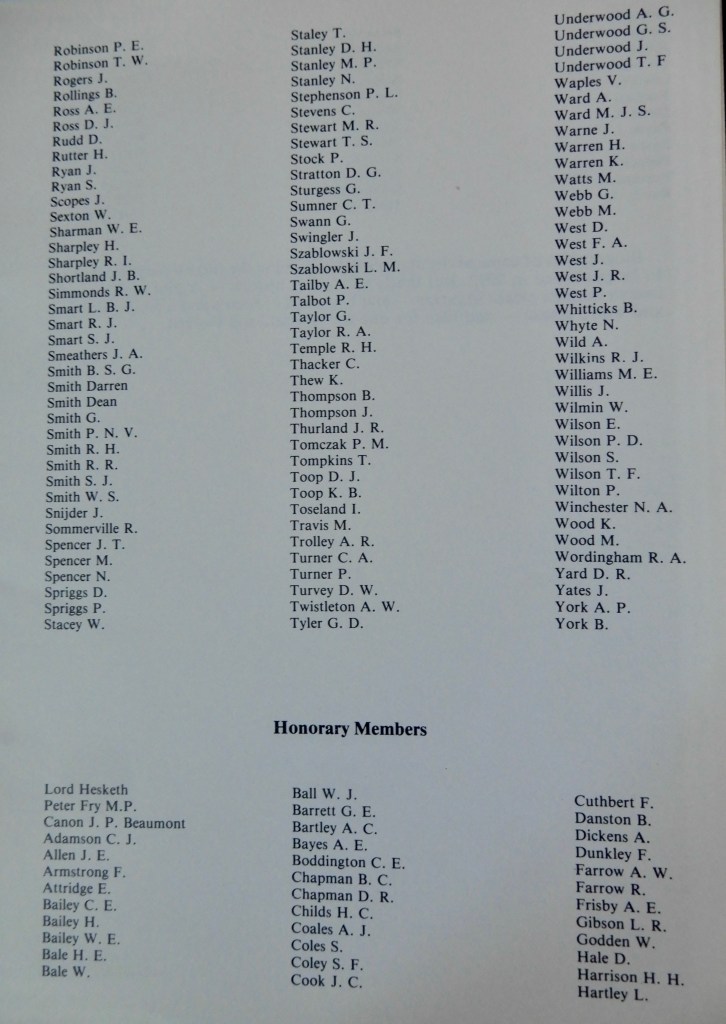
In 1992 Finedon’s Conservative Club celebrated its centenary. The commemorative brochure reproduced below is a wonderful treatise to the history of the organisation.
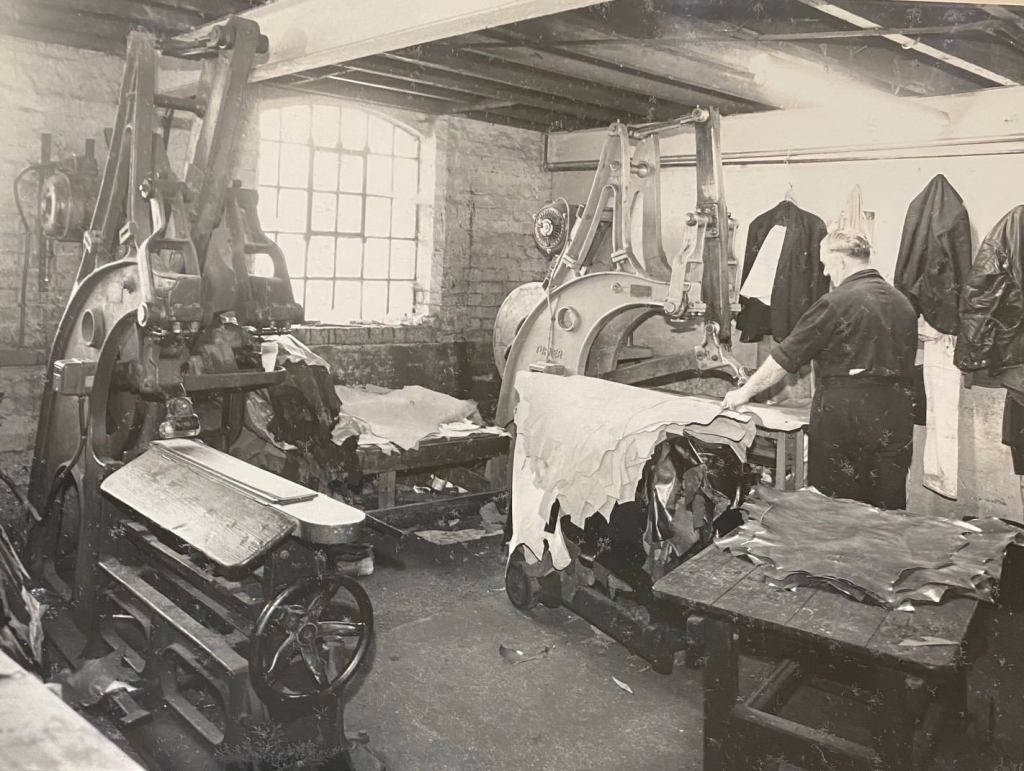
From the middle to late 19th century until the 1970s shoemaking was the major source of employment for many communities in Northamptonshire, Finedon was no exception. At its peak in the 1950s there were nine significant boot and shoe factories in the town, together with other businesses supplying materials and components.
Prior to the middle of the 19th century footwear was made by ‘cordwainers’ who made shoes by hand for local people. Often the parts of the ‘uppers’ were sown together (known as closing) by the shoemaker’s wife. All this changed as mechanisation was eventually developed.
Initially, treadle sewing machines were introduced to sew the uppers and small groups of people joined together in homes and barns, known as Outworkers to produce uppers and other components for a shoemaker. Later, larger, more powerful machines which could stitch the uppers to the soles of the shoes were introduced. These could only be economically used in factories built especially for that purpose.
~
1886
The Finedon Co-operative Society Boot and Shoe Company was founded at the junction of Obelisk Road and Mulso Road. This factory closed in 1935 and was taken over by the Debdale Leather Company.
1889
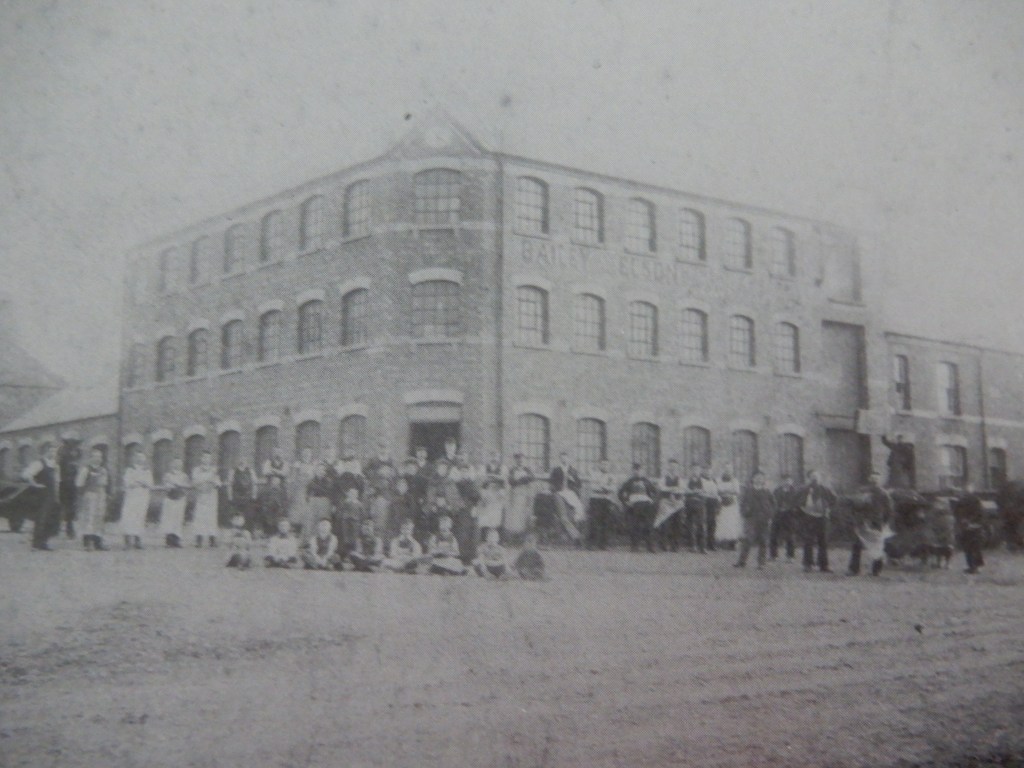
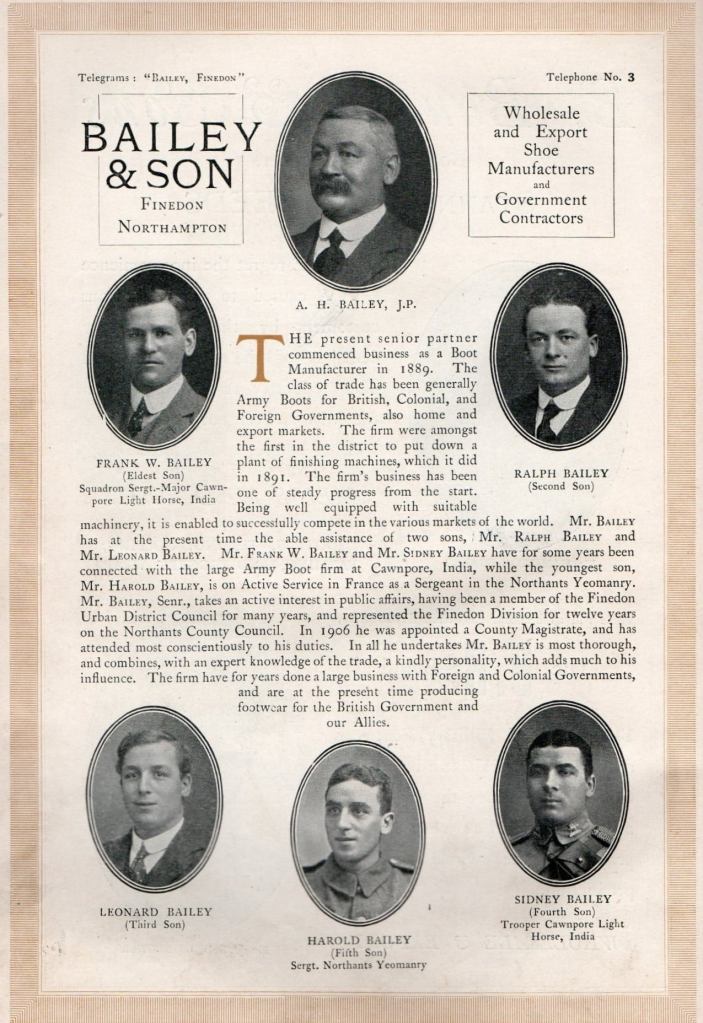
Albert Bailey and Samuel Elson started the firm of Bailey and Elson which was situated on the corner of Mulso Road and Wellingborough Road. Albert Bailey has previously worked at Charles Wright’s factory in Church Street. The partnership was dissolved in 1900 and became known as A.H. Bailey and Sons, in which at various times the father worked with up to five of his sons. This factory was closed and demolished in the 1960s.
~
Bailey and Elson 1897
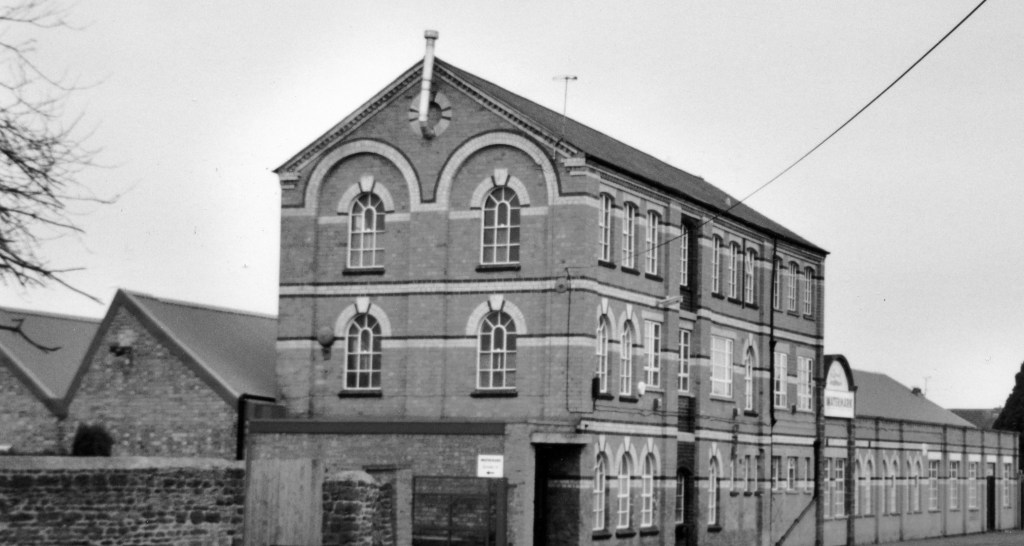
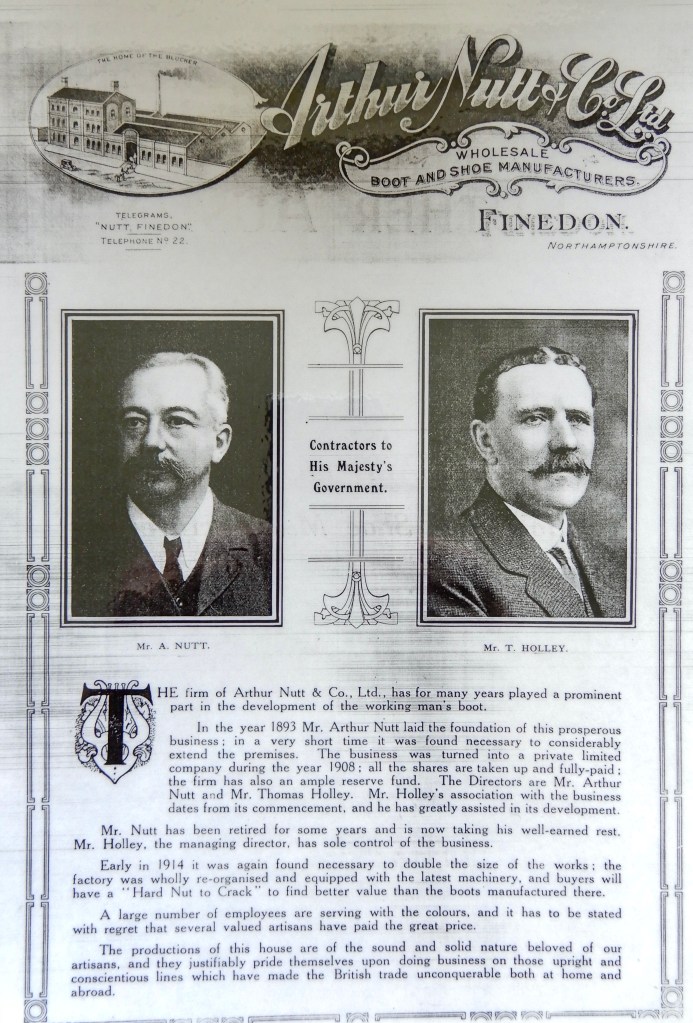
In 1893, Arthur Nutt founded his company in Wellingborough Road which was eventually taken over by the Coles Group before becoming part of the Griggs Organisation, which produced the ‘Doc Martin’ range of footwear. The factory closed in the 1990s and has since been converted to flats as is Minney’s factory.
~
1900
Having split with Albert Bailey, Samuel Elson went on to build the Tower Boot Company situated between Wellingborough Road and Well Street. Sadly, the firm went bankrupt in 1904 and Elson emigrated to Canada with sixteen members of his family. The factory was later owned by the Pearson family for a considerable time before it became part of the Griggs Organisation and later closed.
In 1910, the firm of Yorke Brothers was started in Finedon by R E and W A Yorke. W A died in 1915 but the firm carried on producing boots for the army during the Great War as did many others. Exactly where the factory was is not clear but was it the same Yorke Brothers who traded in Wellingborough for many years.
In 1929, the firm of John R Gammidge was started, situated between Summerlee Road and Milner Road. It was created by John Gammidge and Alfred Minney. Subsequently their sons Peter Gammidge and John Minney took over the business. In 1995, the firm closed the Finedon factory and moved to Kettering Parkway, where they designed and marketed footwear as opposed to manufacturing them.
~
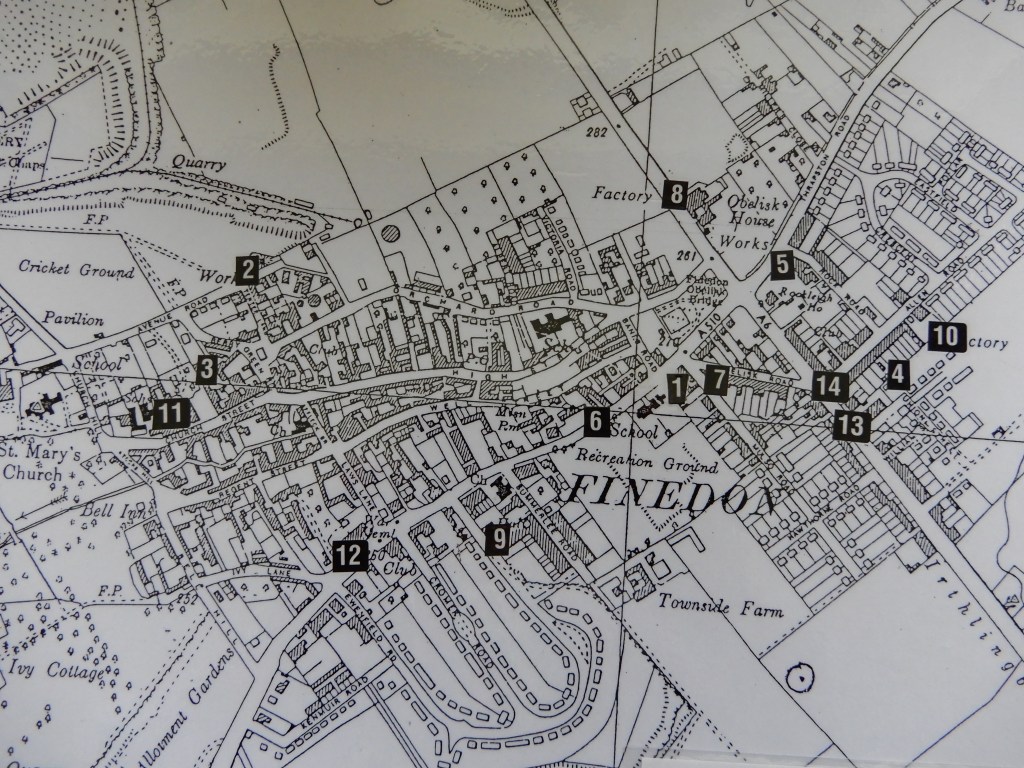
Locations of Finedon’s Boot and Shoe Factories
1. A.H. Bailey & Son,
on the corner of Obelisk Rd and Wellingborough Rd
2. A.W. Minney & Sons
(Tower Works), at the top of Tenter Lane
3. Roy Bailey,
Situated at Berry Green
4. Coggins,
In Allen Rd a small ‘Closing Room’ operated by Coggins of Raunds.
5. G. Knight,
at the corner of Rock Rd and Thrapston Rd, later to become Rockleigh
Shoe Company (Loakes Bros).
6. The Tower Boot Company,
Situated between Wellingborough Rd and Well St.
7. Finedon Co-operative Boot and Shoe Company,
located at the junction of Obelisk Rd and Mulso Rd
8. J.T. Hawthorne
Located on Burton Rd, later to become Rockleigh Shoe Company
(Loakes Bros) Closing Room.
9. J. R. Gammidge Ltd,
Spanned between Summerlee Rd and Milner Rd.
10. Trolley Brothers,
Situated along Allen Rd.
11. Charles Wright,
Located at the bottom end of Church St.
12. Arthur Nutt and Co Ltd,
On the corner of Wellingborough Rd and Laws Lane, later to become Coles’s Tower Boot and R Griggs & Son.
13. J.H.Fox,
Situated on Irthlingborough Rd, later to become Highfield Boot and Shoe, sadly destroyed by fire in 1926.
14. Arthur Parker/Elam Cooper,
Located on the corner of Irthlingborough Rd and Allen Rd.
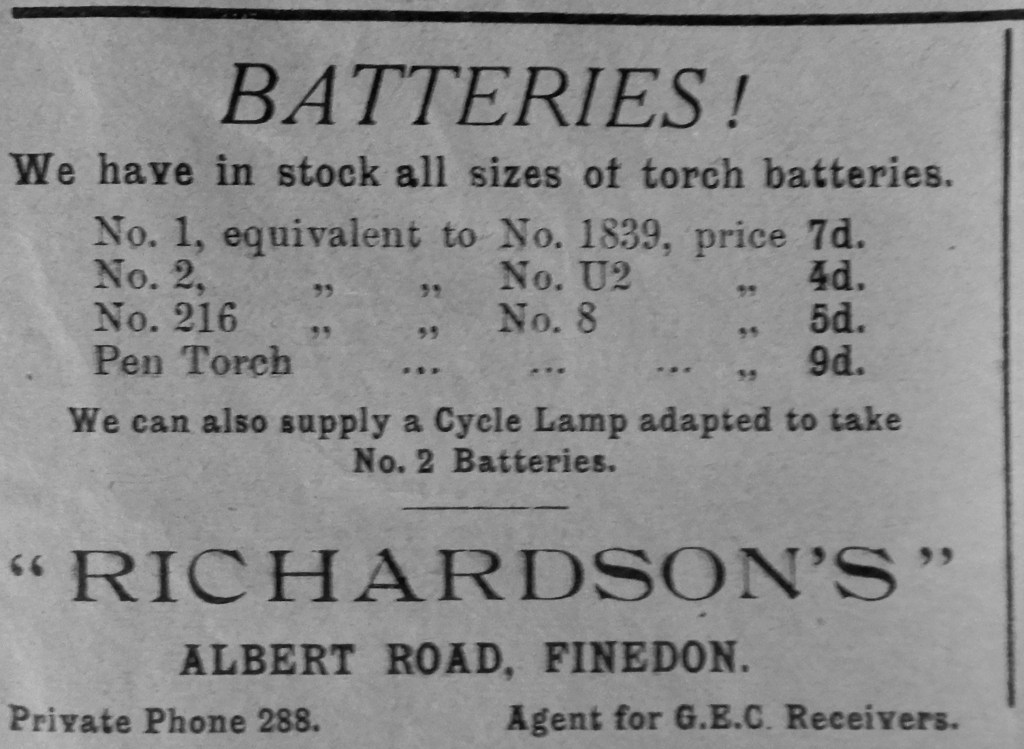
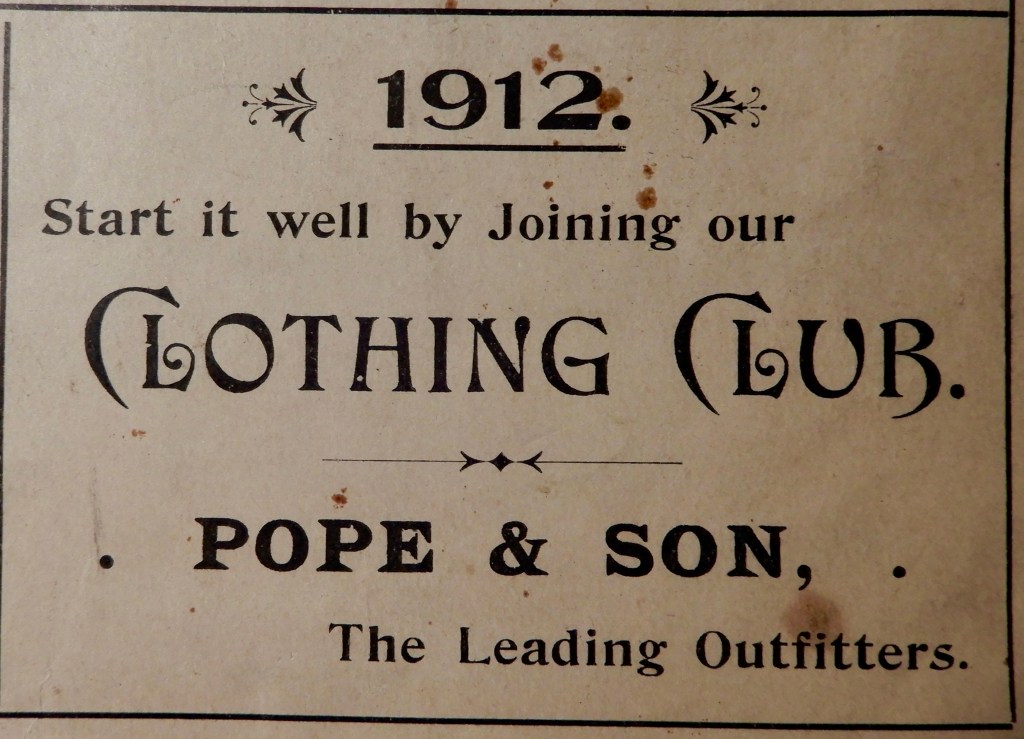
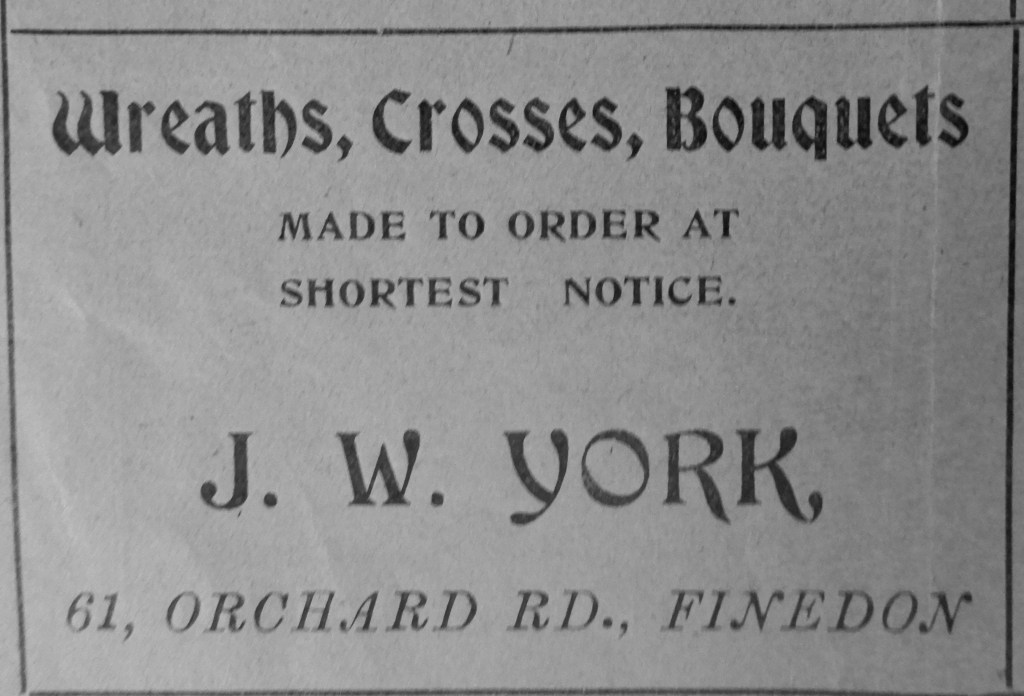
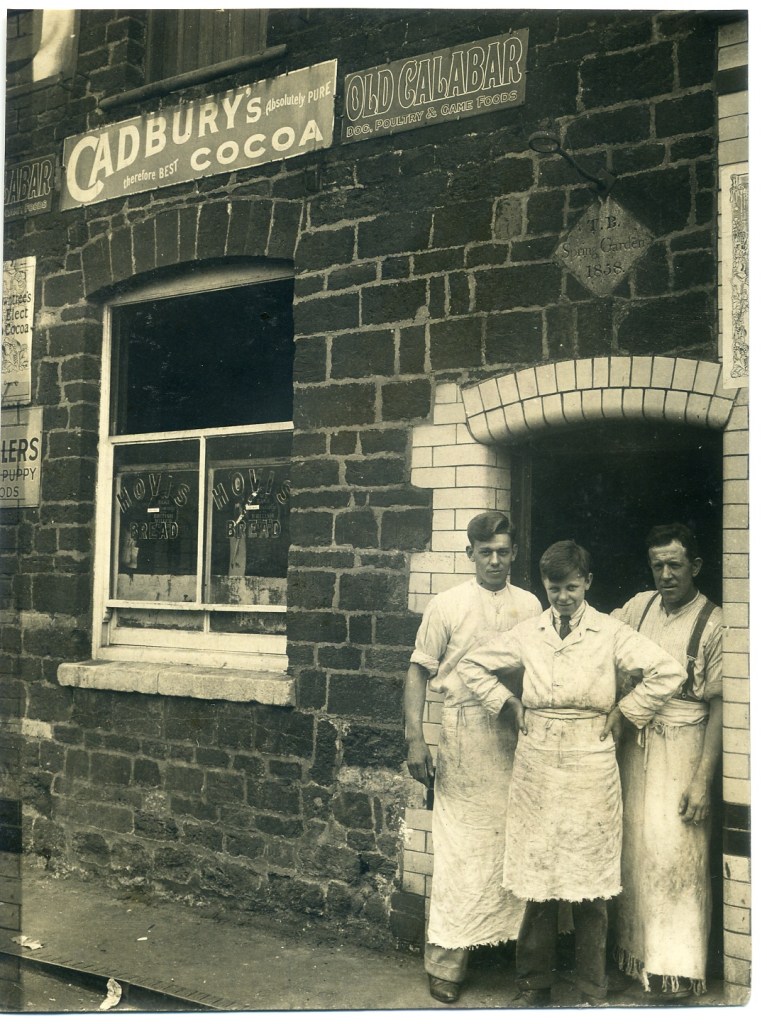
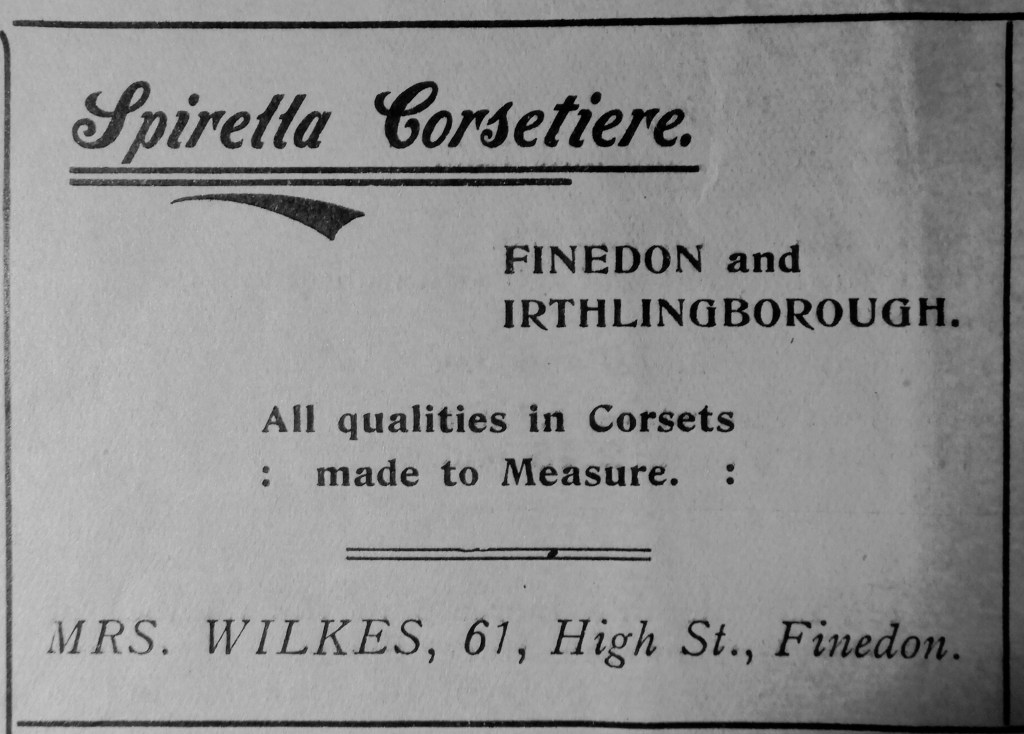
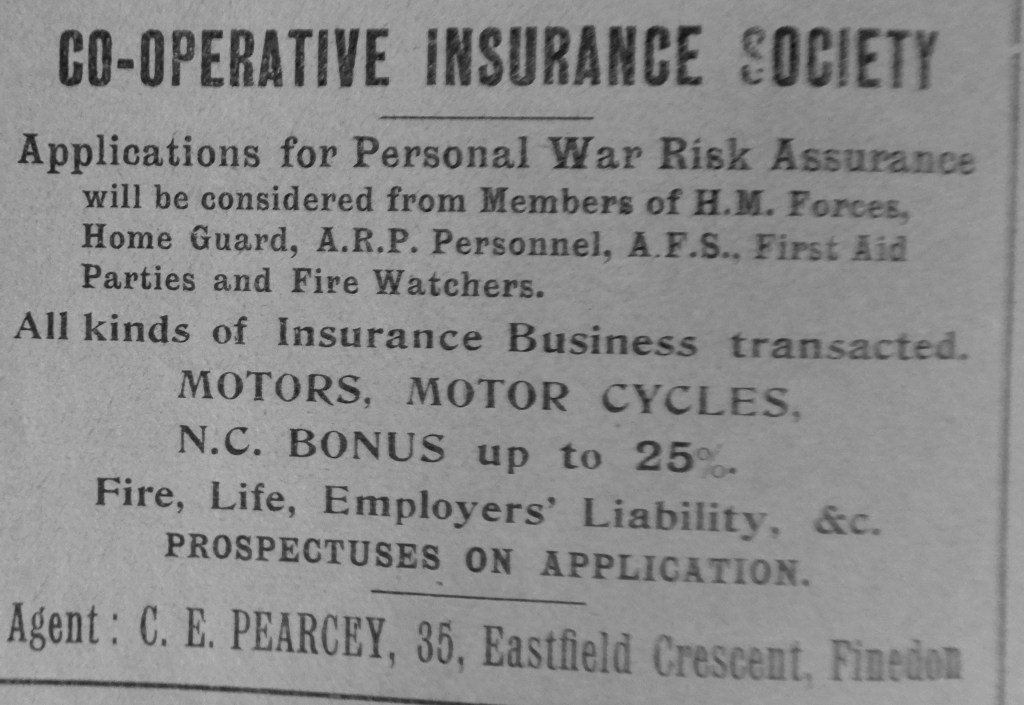
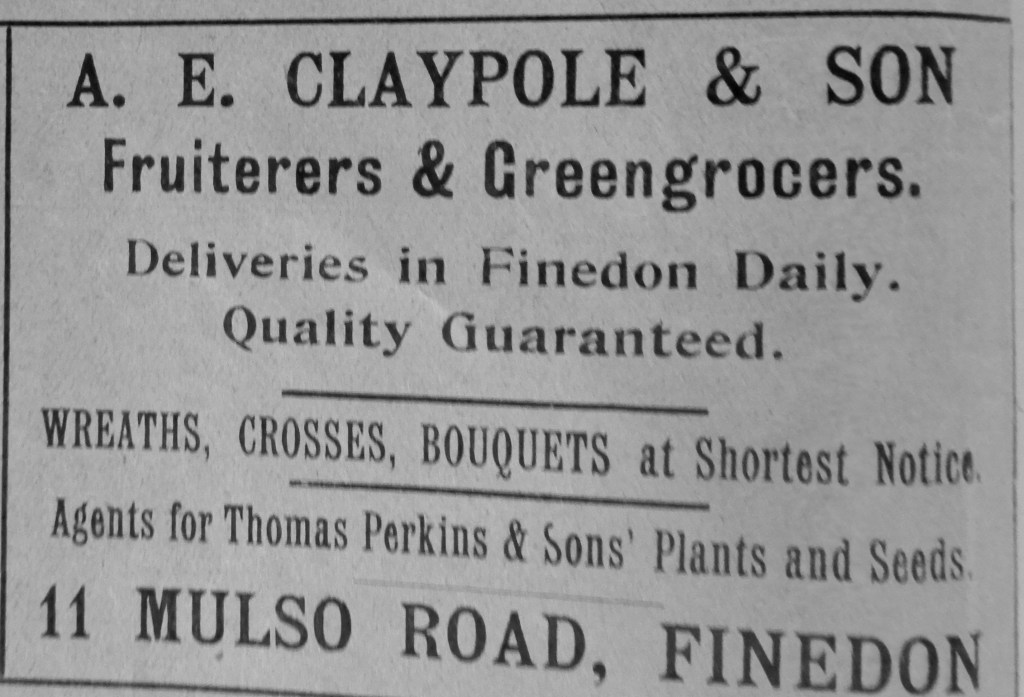
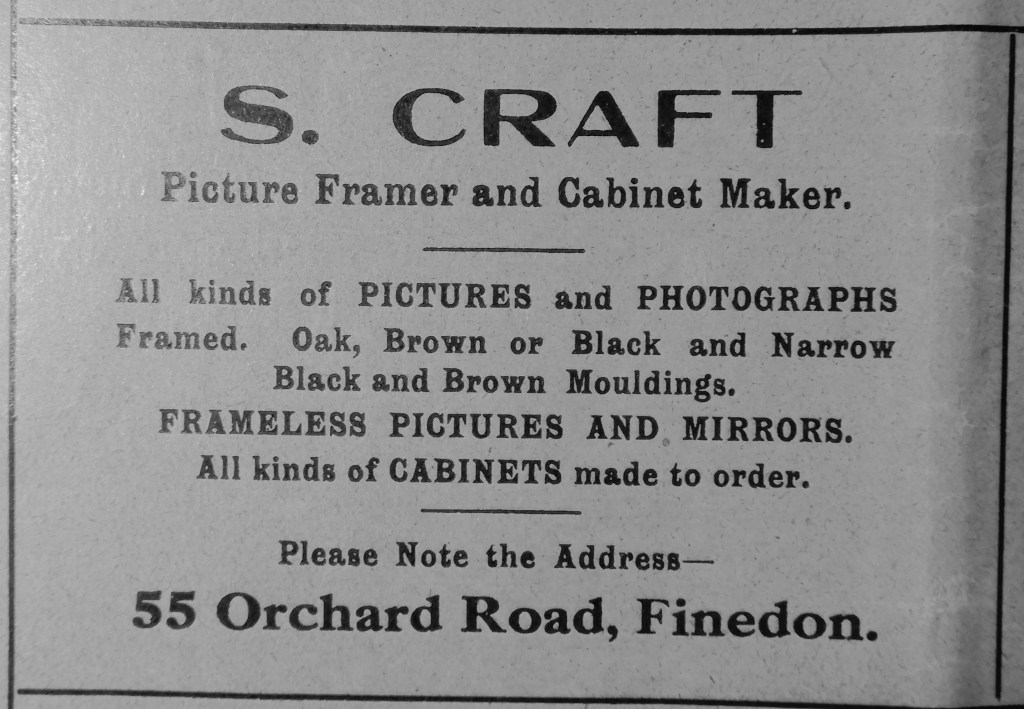
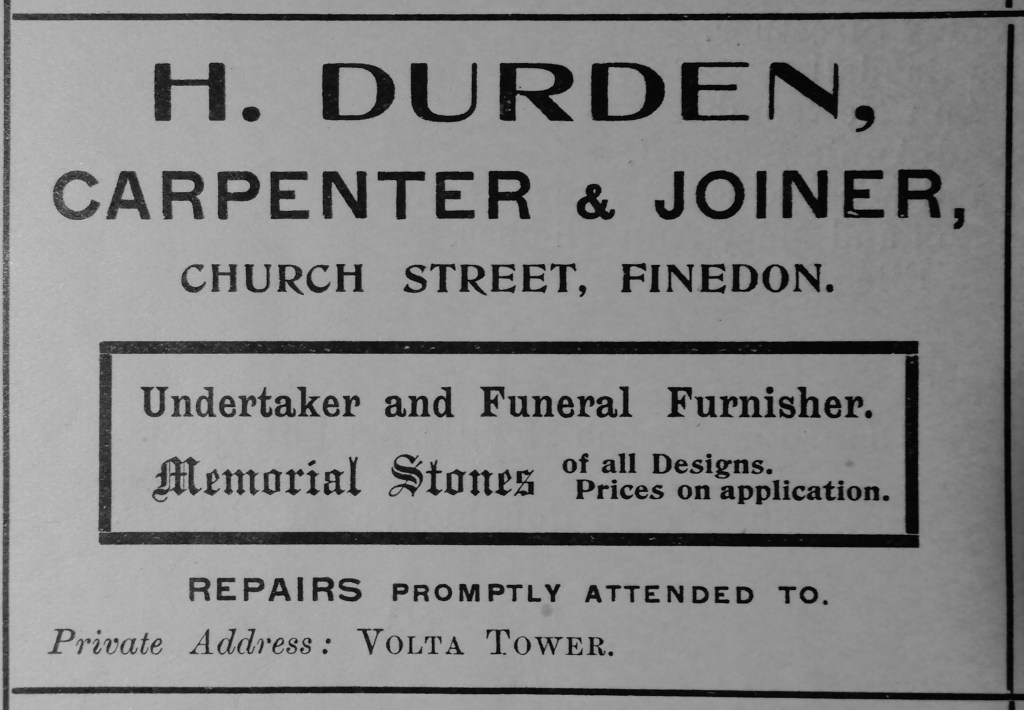
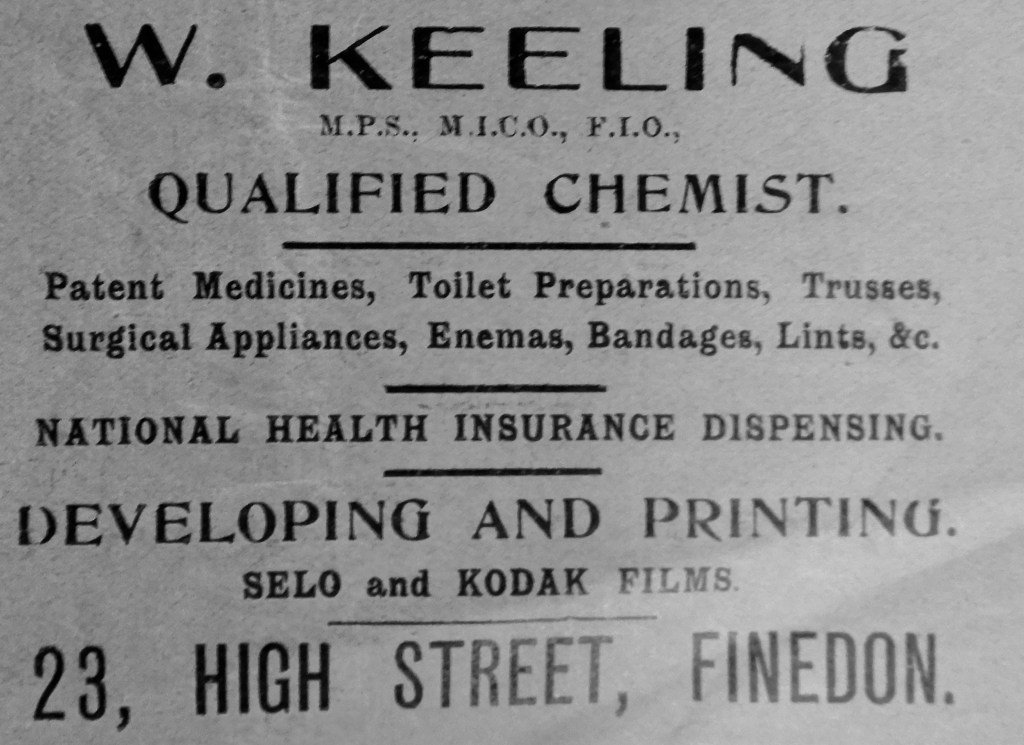
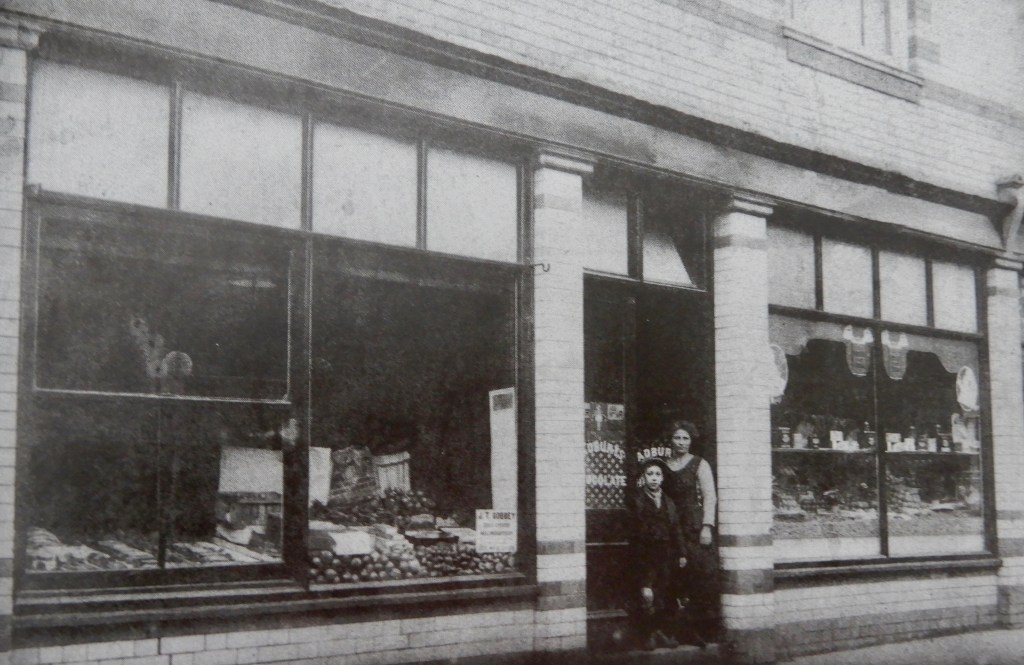
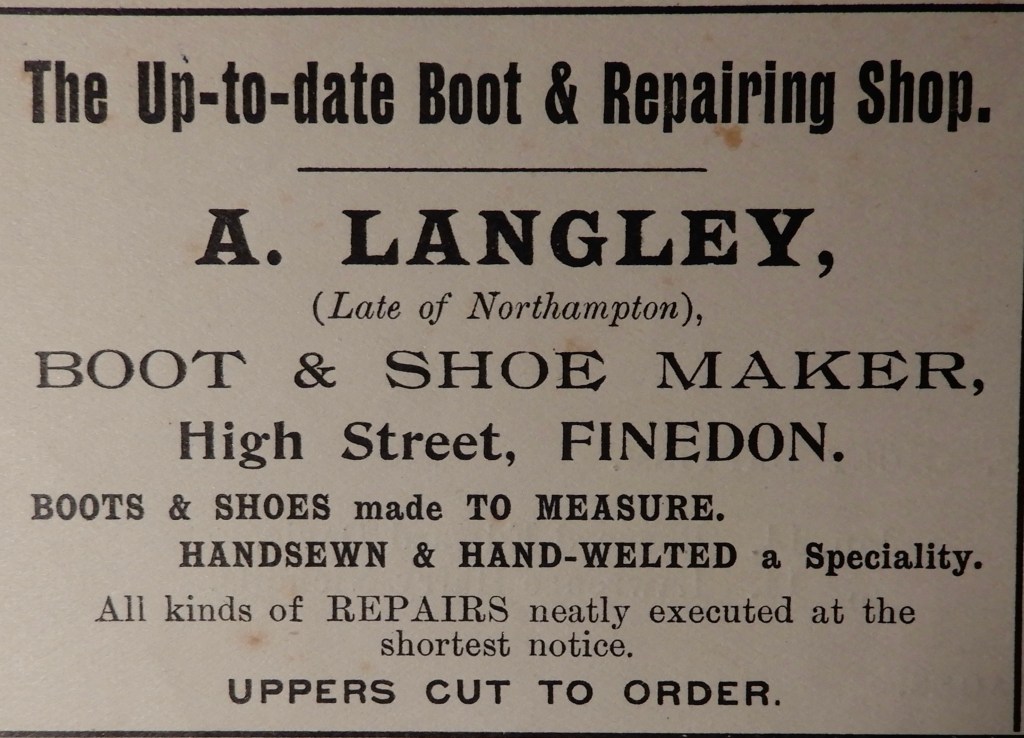
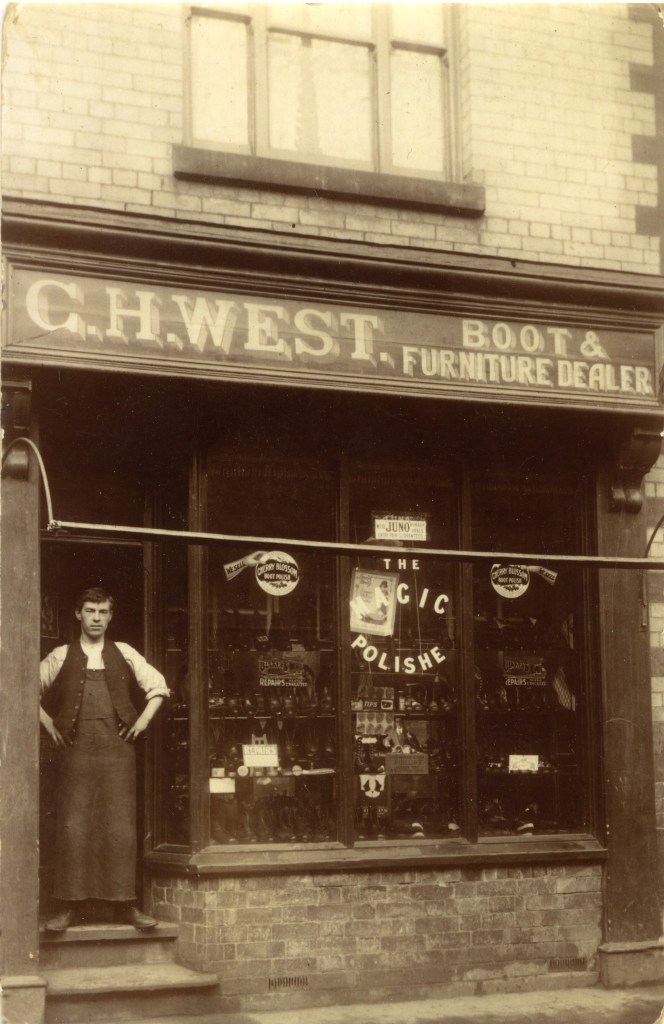
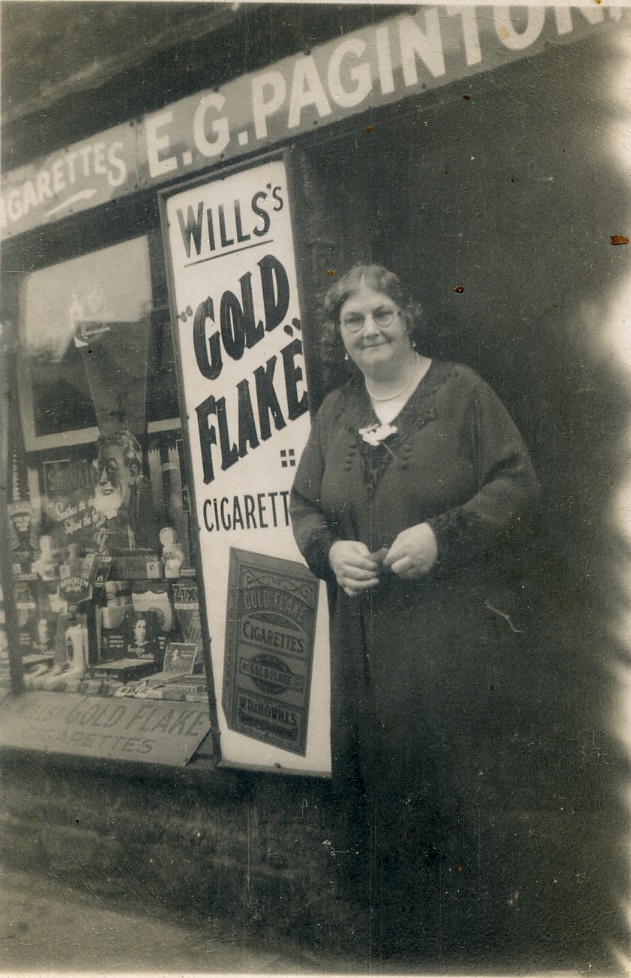
It must be difficult for anyone born after the year 1970 (or perhaps even a few years prior to that) to understand the wealth and range of businesses and services that were once available to consumers and customers in Finedon prior to, between and immediately following the two world wars
We re-print here a variety of old advertisements and flyers together with some photographs of business premises that are no longer trading (some of which have been demolished) at the current time.
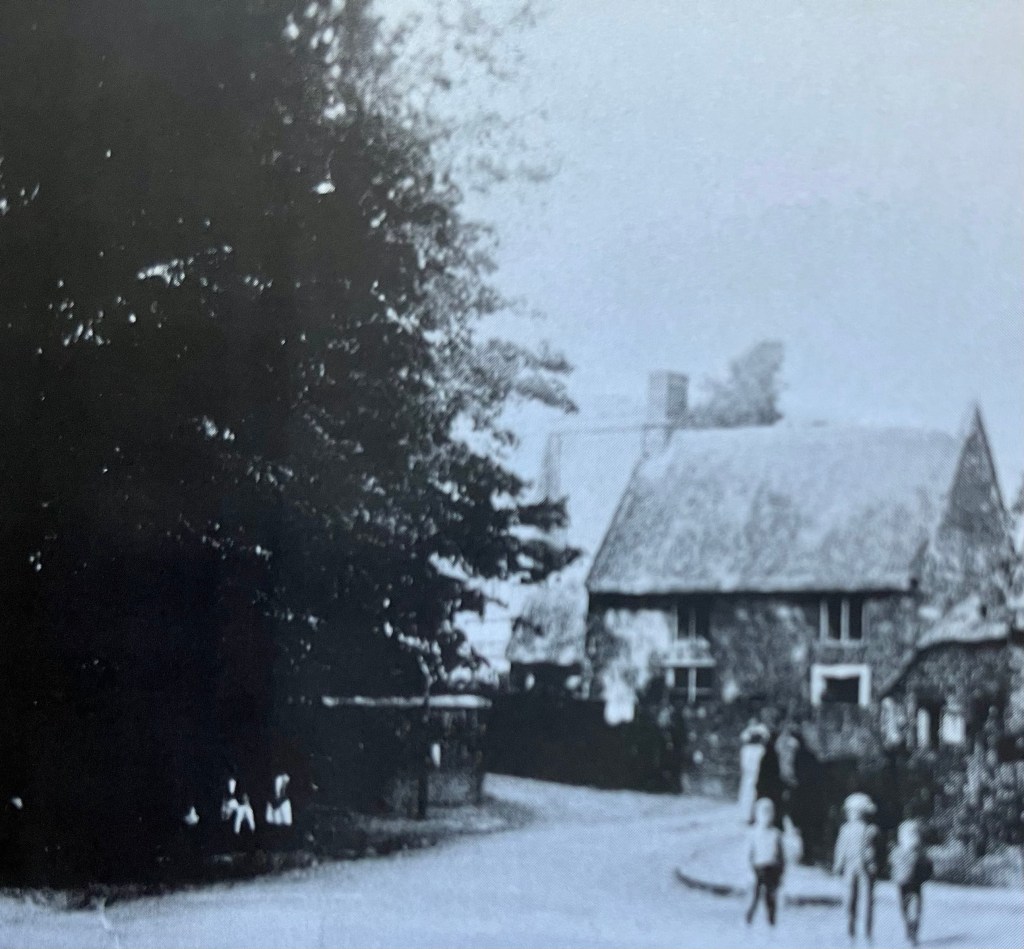
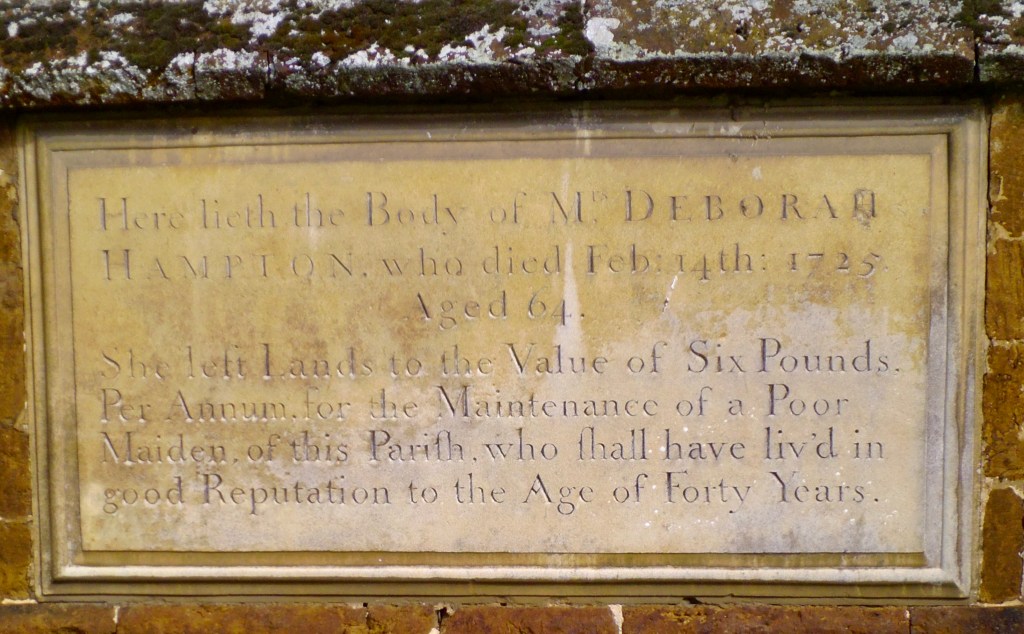
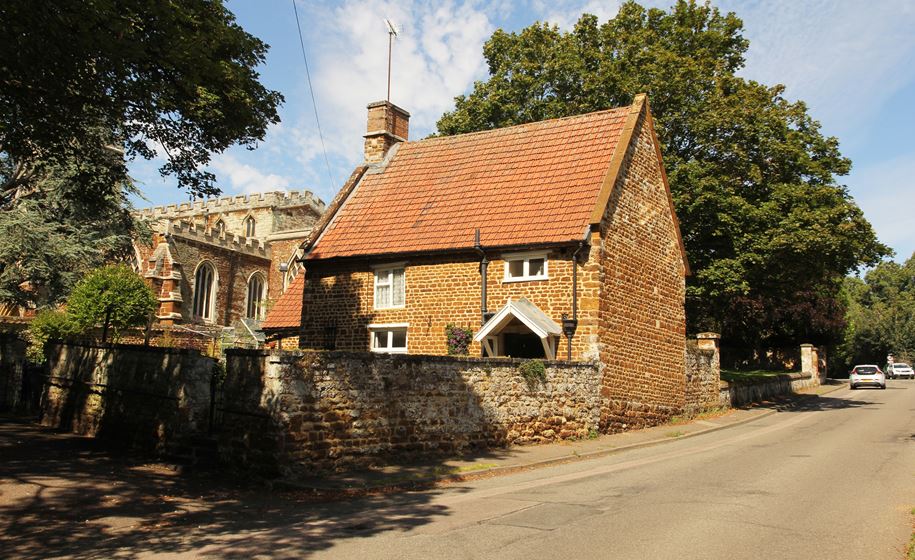
Known locally as the ‘Old Maid’s Cottage, Hampton Cell stands at the bottom of the St Mary’s Churchyard at the base of Church Hill. The cottage owes its existence to a Miss Deborah Hampton who, until her death in 1725, was housekeeper to Lady Anne Dolben, the widow of Sir Gilbert Dolben.
~
In her last will and testament, Miss Hampton decreed that the land that she owned (a sixteen-acre field on the north side of Thrapston Road) be held in a trust for her two sisters and a niece, then after their demise, that the rents from the land be used to maintain a ‘one poore maiden of the parish of Finedon who has lived to the age of fourty years in modest report’.
~
She also subsequently further decreed that three years rent from the land be used to build a ‘small tenement for the poore maiden to dwell in’ and the provision of two shillings every week for her support. The trustees of this arrangement were Sir John Dolben, the incumbent vicar of the time and Mr John Walton the schoolmaster.
In his book, ‘Finedon Otherwise Thingdon’, (from where these details are respectfully reproduced) local historian John L H Bailey states that whilst there is a 1742 date stone carved in a stone lintel above the door of the cottage, the building must pre-date this as rates were being paid on it in 1738.
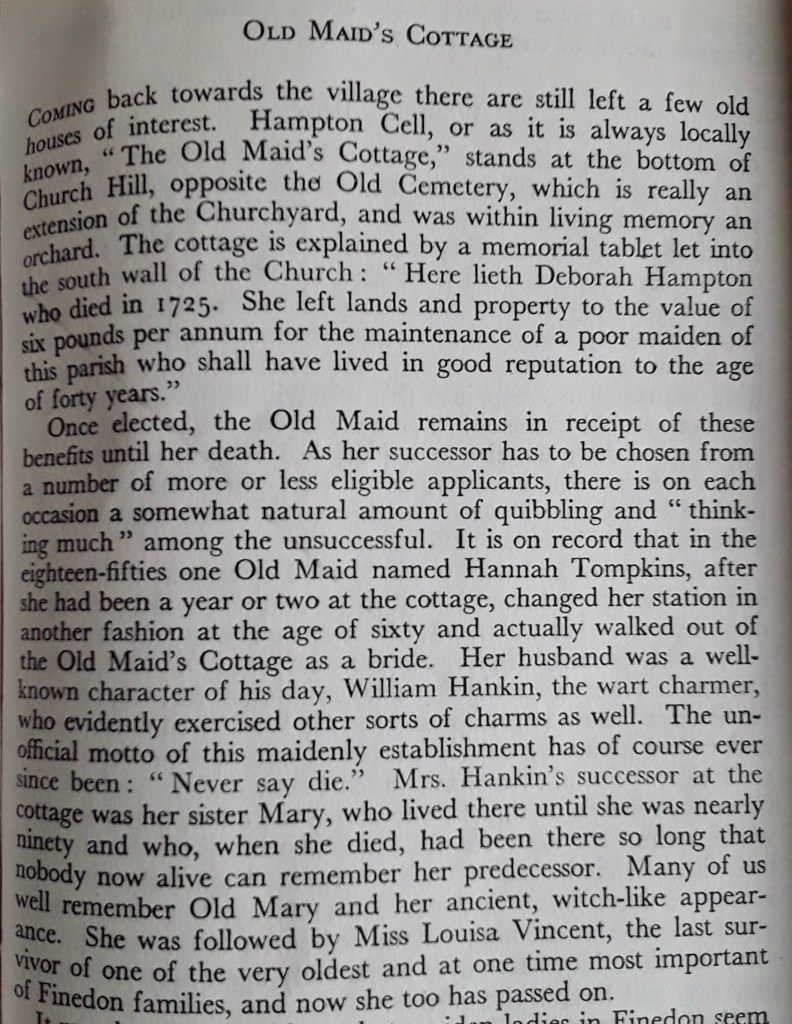
The earliest recorded occupant of Hampton Cell is Elizabeth Sibley who lived there in 1806, she died in 1838, aged 76 and was succeeded by Hannah Wallis who died in 1848, aged 80. The next incumbent was Mary Freeman, who in 1851 had an old pauper, Martha Wallis, lodging with her. Miss Freeman died in 1866 aged 65 and was succeeded by Mary Tompkins who was there in 1871, although Reginald Underwood, in his book Pageant of Finedon, suggests that her sister Hannah Tompkins may have preceded her for a short time before leaving to marry a local wart charmer!
~
Mary Tompkins (known locally as Mary Maid) remined at Hampton Cell until 1906 when she died at the age of 90. Ann Newman Willis became the next occupant until she died in 1912, being succeeded by Louisa Vincent and after her death Miss Ada Young became the “Old Maid” in 1918 remaining there until 1949 when she was admitted to a local hospital. Following this, the property was declared unfit for human habitation and there had been a potential risk that it may have been demolished.
The Charity Commissioners supported a loan for its renovation and in 1951 Miss Adeline Chapman became the next occupant until she died in 1953, succeeded by Miss Mabel Ager until she left the cottage in 1965. As no properly qualified applicant could be found Hampton Cell was let to a married woman Mrs Mildred Brown in 1965 who remained for a few years and then left which gave the opportunity for Miss Lillian Chapman to move in 1968 and remained there until her death. Miss Molly Thompson in 2003 became the next ‘old maid’ before making way for the present incumbent Ms Enid Biggs in 2017.
Elizabeth Sibley, 1806-1838
Hannah Wallis, 1838-1848
Mary Freeman, 1851-1866
Hannah Tompkins, 1866-1871
Mary Tompkins, 1871-1906
Ann Newman Willis, 1906-1912
Louisa Vincent, 1912-1918
Ada Young, 1918-1949
(closed for renovation)
Adeline Chapman, 1951-1953
Mabel Ager, 1953-1965
Mildred Brown 1965
Lillian Chapman 1968-2001
Mollie Thompson, 2003-2017
Enid Biggs, 2017-present
An excerpt from Reginald Underwood’s ‘A Pageant of Finedon’.
~
Hampton Cell is a grade II listed building by Historic England in 1970
Listed as a Bed House. Alms-house. Datestone 1742. Regular coursed ironstone with pantile roof 2-unit plan. 2 storeys. 2-window range of C19th and C20th casements under wood lintels. Cl9th door to right under stone lintel has gabled hood. Ashlar gable parapet and stone stack at end. Inscription over door “Hampton Cell Anno Dom 1742”. Single storey outhouses attached to left. Endowed as an alms-house by Miss Deborah Hampton. (Finedon Otherwise Thingden by J.L.H. Bailey, p.122).
Before the advent of the Industrial Revolution the occupants of most small agricultural villages, such as Finedon, would have, in the main, either worked on the land or in so-called “cottage-industries” from home.
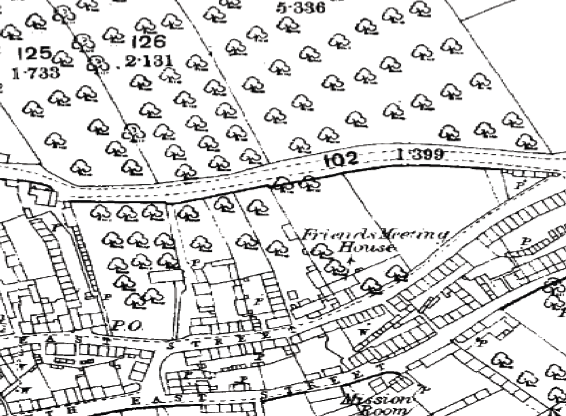
Maps from the period show that Finedon had considerable orchards around the village, particularly in the area to the north, what is unsurprisingly known today as Orchard Road.
In order to make a dried apple, it must be cooked very slowly for around five hours over a constant low heat. Finedon was fortunate in that, at the time it had a number of bakers and bake houses. The combination of these two factors, bakers and orchards, gave rise to the local industry of producing Finedon Dried Apples. This enterprise existed from the early part of the 18th century until it gradually ebbed away in the middle of the 19th century.
The best type of apple for producing dried apples was the Norfolk Biffin. This apple is also referred to as the Norfolk Beefing or Norfolk Beaufin. Norfolk Biffins, or Beefings, are round, slightly flat, apples about three inches across and two and a half inches high (about seven by six centimetres). The skin is yellow-green, but with brown-purple and dark red streaks. Inside, the flesh has a green tint, is crisp, and is said to have a hint of the flavour of cinnamon. The apples store well, getting sweeter with keeping, and are good for cooking and drying. By March of the year after harvesting, they are sweet enough to use as dessert apples. With keeping, they turn a deeper brown or maroon colour, with harder, more solid flesh. They were also used for cider making. The trees are vigorous, with heavy crops of fruit. Some thinning is necessary in good years.
One source refers to the definition of a “biffin” as a “baked apple flattened in the form of a cake”. Produced in this style, the apples could then be kept for months and would be consumed as a “treat” or a “dessert”. Additionally, being a preserved fruit, they could then also be packaged and transported across the county and countrywide.
The Norfolk Biffin was a very popular apple in the early Victorian period and a positive reference can be found in Charles Dickens “Christmas Carol” (published in December 1843) when describing the beautiful shop displays in the lead-up to Christmas.
“There were pears and apples, clustered high in blooming pyramids; there were bunches of grapes, made in the benevolence to from conspicuous hooks, that people’s mouths might water gratis as they passed; there were Norfolk Biffins, squat and swarthy, setting off the yellow of oranges and lemons, and in the great compactness of their juicy persons, urgently entreating and beseeching to be carried home in paper bags and eaten after dinner”.
Dickens also favourably referred to the Norfolk Biffin in “Martin Chuzzlewit” (1843) and “Dombey and Son” (1848). In a lesser known book, “Boots at the Holly Tree Inn” written in 1858 Dickens writes,
“Cobbs, do you think you could bring a biffin, please? I think a Norfolk biffin would rouse her, Cobbs. She is very fond of them”.
Sadly, the popularity of the Norfolk Biffin apple died out in the late Victorian period and they are now rarely seen in orchards or harvested for commercial purposes. However, to celebrate the dried apple industry and its past historic links with Finedon three Norfolk Biffin trees were planted as part of a project: one in grounds of the Parish Church and one at the Friends’ Meeting House. The third tree was planted in the grounds of Finedon Infants School that has its own link to the past heritage of Finedon with its apple tree logo.
Elements of the history of the sale of Finedon’s Dried Apples can been collated from advertisements of the period that appeared in the Northampton Mercury newspaper.
The earliest known newspaper article relating to Finedon Dried Apples can be found in the Northampton Mercury of Monday 23rd July 1770. As a footnote to the advertisement of Thomas Smith “Cyder-maker of Finedon” it states,
“Gentlemen, etc. may be furnished with Dry’d Apples at the same time”.
This is followed by another Northampton Mercury advertisement of 23rd March 1773.
In the above advertisement of 22nd March 1773 Thomas Smith now appears to have broadened his range of products by making “excellent fine Dryed APPLES” now an equal feature of his advertisement alongside his “Bottled Cyder” and “at the Seasons of the Year “APPLES and PEARS of all kinds”.
It is interesting to note that that the advertisement states that, “Thomas Smith has dealt in the above Articles for nearly forty Years past.” Should that be the case then dried apples could well have been produced in Finedon from the early 1730s.
The language in these advertisements of the time is very formal, “Likewise the Nobility, Gentry and others…” coupled with “…most and obedient, humble Servant.”
By the year 1808 dried apples are being sold by other retailers in the county acting as agents of the Finedon dried apple producers. The Northampton Mercury of Saturday 27th February 1808 carries this advertisement.
J. Abel regularly advertises in the newspaper during the autumn as the agent of a Finedon dried apple supplier, however, at no time is the supplier identified. At all times the supplier is referred to as “the Person who prepares them at Finedon”.
In the 14th November 1812 edition of the Northampton Mercury a postscript is added to the J Abel’s advertisement stating that, “…boxes are priced at 20 shillings (£1) each, and if persons enclose a £1 note then the box can be sent by coach or wagon to any part of the kingdom”.
The Northampton Mercury 4th March 1815 saw J. Abel still acting as agent, however the advertisement now includes prices and quantities, “In boxes of various sizes from 4s (shillings) to 25s. each; or by a single Pound”. From the archives of the Northampton Mercury J. Abel was selling Finedon Dried Apples up to December 1823.
J. Abel has also been found to advertise in The Times newspaper. This shows that Finedon Dried Apples were being promoted and advertised at a national level to customers of “higher standing” than would be expected in a county newspaper!
During the same period of time other retailers in Northampton were selling dried apples. William Emery of the Drapery, Northampton did state they were of his own preparation of Norfolk Biffins of a, “very superior flavour” but, unfortunately, no indication of their source is given. He was producing dried apples through the 1820’s and on until at least 1840.
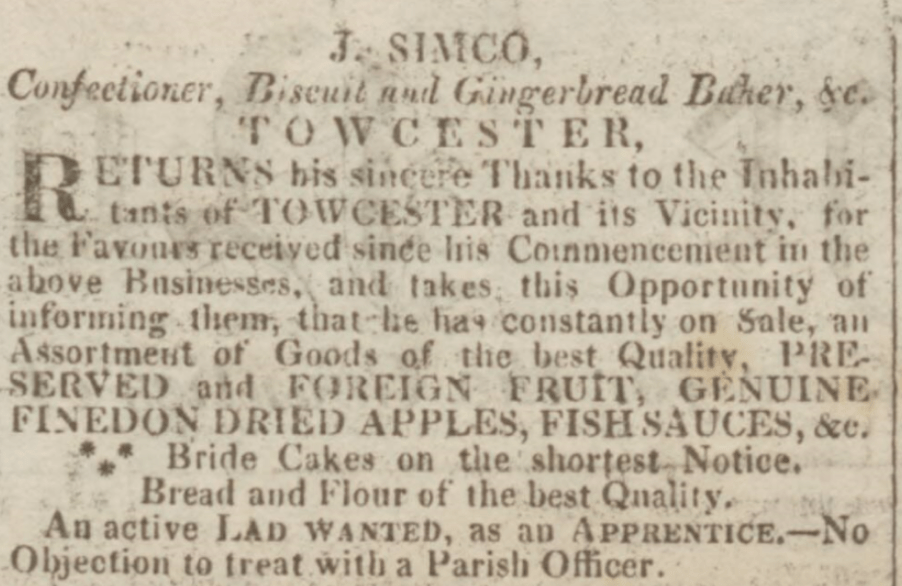
J. Abel was not the only person known to have acted as an agent for the sale of Finedon dried apples. The Northampton Mercury of Christmas Day 1819 records J. Simco of Towcester was selling “GENUINE FINEDON DRIED APPLES”.
In the October 1829 editions of the Northampton Mercury two Finedon producers and suppliers of dried apples are vying for custom.
In the 10th of October edition Mrs Frances Barker (widow of Mr Barker) advising the customers of her late husband that she is still able to supply them with fine flavoured apples at one shilling per pound.
This is quickly followed on the 23rd of October by William Butlin. It is interesting to note that William Butlin too, as J. Able, states that his products can be, “conveyed to all Parts of the Kingdom.” Another example of the saleable commodity of Finedon dried apples and the lengths that would be needed to be taken to transport them across the country.
In the Northampton Mercury of 15th January 1831, George Pettifer advised his customers of all his goods, including Finedon dried apples, “that he was removing from George’s Row to The Drapery Northampton”. George is still advertising Finedon Dried Apples in December of the same year.
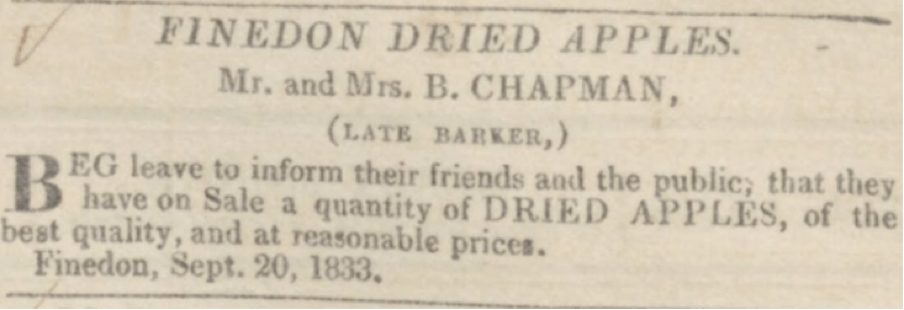
Francis Barker, now the widow of Mr Barker, remarries and continues to trade in the production and sale of Finedon dried apples when she advertises during the autumn of 1833.
William Butlin also advertises his dried apples in the same year but his advertisement is a repeat, almost word for word, of his elegant, pretentious and formal notice of 1829.
By the late 1840s the advertisements for Finedon dried apples begin to disappear from the newspaper advertising columns, reflecting the state of this local industry. The last known producer of Finedon Dried Apples was Edmund “Berry” Chapman who continued until the early 1880s. Therefore, it quite possible that these local bakers and others placed the name of Finedon on the tables of this country for close to 150 years!
Waterlow Bridge
In very early days Waterlow Bridge was known as “Dough Bridge”. The name changed to Colson Brigg in the first half of the 18th century. It was renamed Waterlow Bridge in 1843, the name which continues to this day.
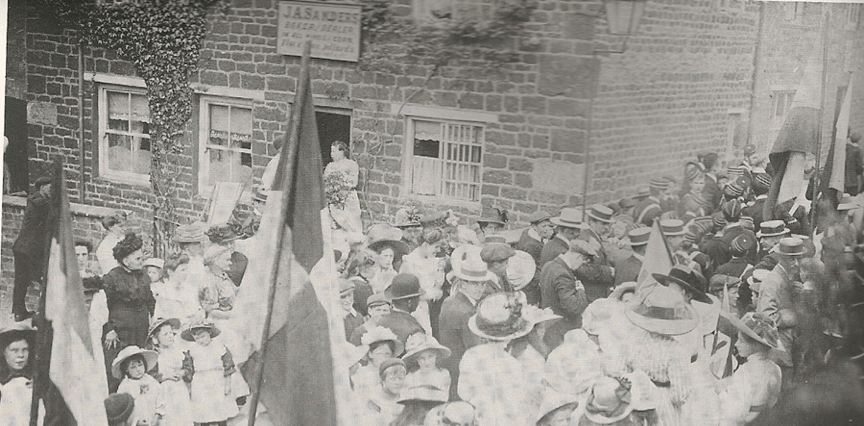
In 1840 William Jaquest, recorded as a “fruiterer” in the 1847 Northamptonshire Post Office Directory, built a stone house on land that was known as Jaquest Orchard. The house was to become a bakehouse. It was occupied by the baker Thomas Butlin from 1854 to 1873, succeeded by his widow Jane.
The business was then sold on to Jane’s son-in-law, George Hasledine and subsequently transferred to a J A Saunders who was occupying the premises in 1911 when the photograph below was taken. The bakehouse was demolished in 1960.
J A Sanders Bakery
High Street
Known as Warner’s bakehouse from only the 1890’s, until its demolition in the 1960s, this building had possibly the longest history of any bakehouse in Finedon.
The late John Bailey in his book, “Finedon Otherwise Thingdon” (1975) records “As far back at 1739 there was a bakehouse and yard on this site called, Spring Gardens”.
In 1806 Dorothy Parker owned the building. Followed by Thomas Barker in 1837 with Benjamin Chapman being the tenant baker. His son Edmund Berry Chapman continued the business. It is know that they prepared dried apples from the trees at the rear of the premises. Edmund Berry Chapman, who is thought to have been the last producer of Finedon Dried Apples, died in 1894. The business was taken over by John Warner. The Warner family continued to run the business until the buildings were demolished with John Warner’s grandson, Mr J Charles Warner, being the last in the line of Finedon bakers who worked at this bakehouse.
Warner’s Bakery
Built in the eighteenth century this bakehouse was recorded as being owned by Benjamin Sharp in 1806.
William Sharp, listed as baker and a farmer in the 1847 Northamptonshire Post Office Directory, was a later owner. However, by 1851 Samuel Stanton had taken over the business.
The Stanton family carried on the business until 1874 when it was sold to a Thomas Partridge. The Partridge family continued the business into the 1900s.
The bakehouse, centre of the photograph below, with Bird Cage Place and the entry to Stanton’s Yard to the left. c1905
The Girls’ Charity School, located in Church Street was built in 1712 by Sir Gilbert Dolben. Originally thatched, the school was part of a foundation set up to provide a limited number of girls from poor families boarding and an education.
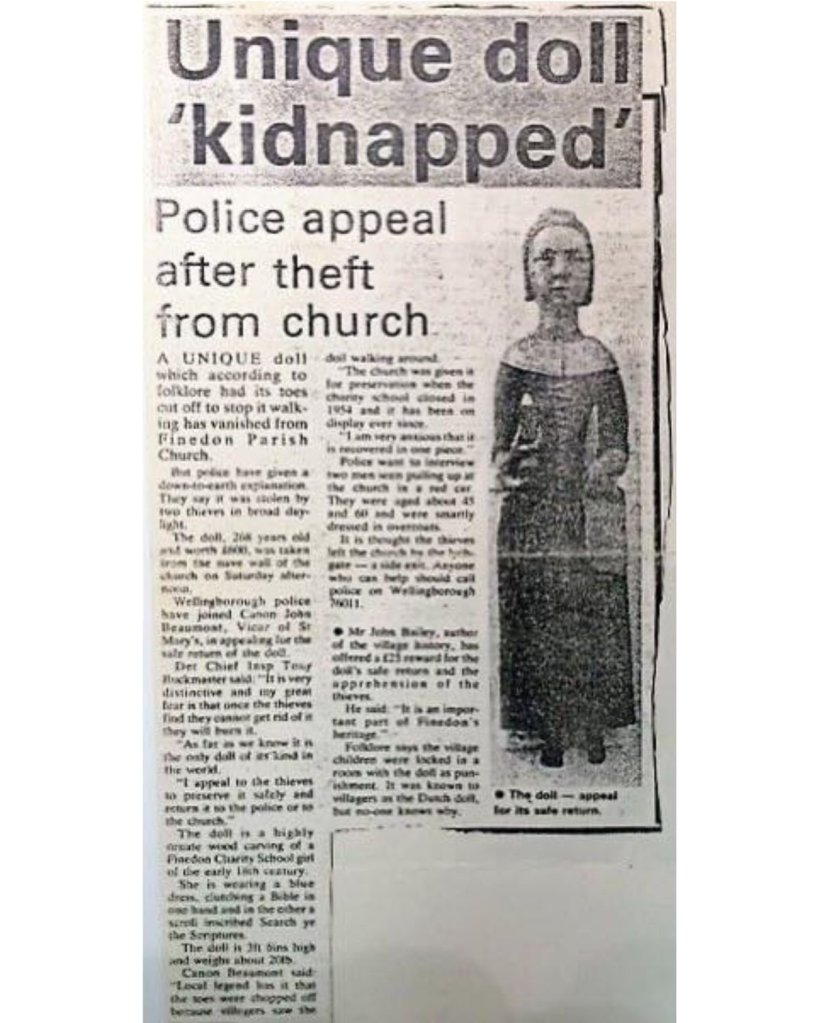
In 1901, Mary Ozier, headmistress of the school wanted to do something special for the school to commemorate its building. She obtained (from sources unknown) a three-foot wooden figure that looked very realistic, dressed in the manner of a Dutch doll.
It was supposedly named for its similarity to the Dutch national costume, which quite possibly also resembled the uniforms worn by the girls who attended the school but “Dutch Doll” was also a commonly used term for wooden peg dolls of the time.
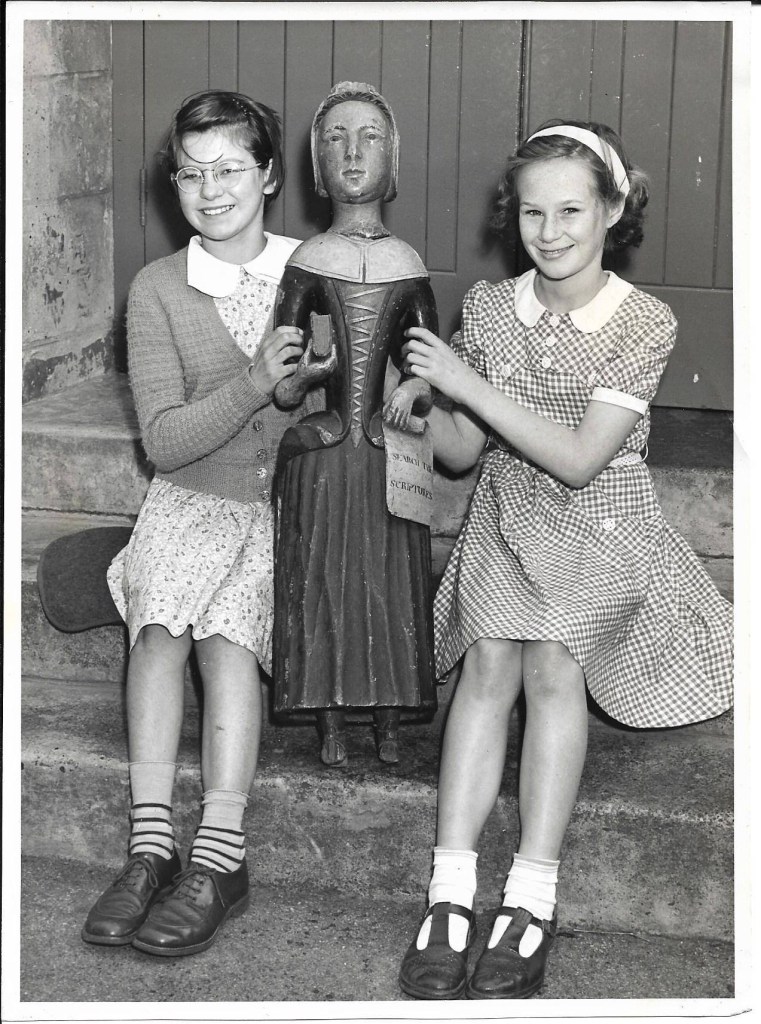
The doll was carved from wood, 3 feet 6 inches (1.07 m) tall, depicted in a blue dress, holding a bible in one hand and a scroll in the other which read “Read Ye The Scriptures” a bible reference from JOHN 5. v39.
The figure was so intricately carved that the dark brown flowing dress looked very realistic as was the carved white Dutch cap that adorned its head. This headpiece became the doll’s most famous and defining feature, resembling the style of hat worn by school children at the time.
The doll’s face appeared rather emotionless with dark staring eyes and tightly closed lips, a strange contrast to the cherub-like cheeks upon which they were pursed. The doll’s attire closely resembled the fashion of a modern-day Puritan woman, complete with dark boots with a slight heel, all carved from wood.
It is thought that at one time the doll had been mounted over a door, where it may have been attached to a mechanism causing it to move when the door was opened. This may well have given rise, amongst easily suggestible school children, to the rumour that the doll sometimes moved on its own, ‘coming to life’ so to speak. Several stories abounded such as the doll walking the corridors at night and stealing the girls’ possessions. Others thought it somewhat demonic, terrorizing those girls that boarded at the school overnight, keeping them awake.
During the sixty years that the doll was located at the school, which closed in 1961, it must have been placed in several places. Folklore has it that one girl witnessed it waving from a window. Furthermore, it is alleged that it was once moved to a cellar so as not to distract the children, although this brought a further scare that disobedient girls would be locked in the cellar with the demonic doll as punishment. All highly unlikely!
(Schoolgirls Ann Wheatley and Maureen Haswell holding the troublesome doll).
~
Thus, whilst the headmistress’s intentions were well-meaning, hoping the girls would become fond of the mascot, the opposite was the case. One can imagine how these rumours easily proliferated.
With a reputation such as it was at that time it is remarkable that the powers that be decided to relocate the doll into St Mary’s Church once the Charity Girls’ School closed in 1961, the children also relocating to the Mulso School on Wellingborough Road.
The doll was mounted on the wall of St Mary’s Church but not before some persons unknown had taken a saw to the doll and amputated both its legs (presumably to ensure the doll would never again terrorise the living) or so they thought.
So, for 20 years the doll hung on the wall of the church until 1981 when it mysteriously vanished from its elevated position.
As the doll is not thought to be worth a significant amount of money, it is widely believed that some prankster knowing the history of the demonic Dutch Doll somehow got into the church and made off with it. However, to this day it has never been found.
Of course, the disappearance mystery itself has given further rise to more conspiracies.
According to some, the doll may have left physically but remains spiritually to carry on its haunting within this ancient building.
The mysterious nature of the doll’s disappearance and the widespread belief in the legends held by the locals of the time, both children and adults alike, have been the subject of at least one novel.





















 From Tingdene to Finedon